admin
admin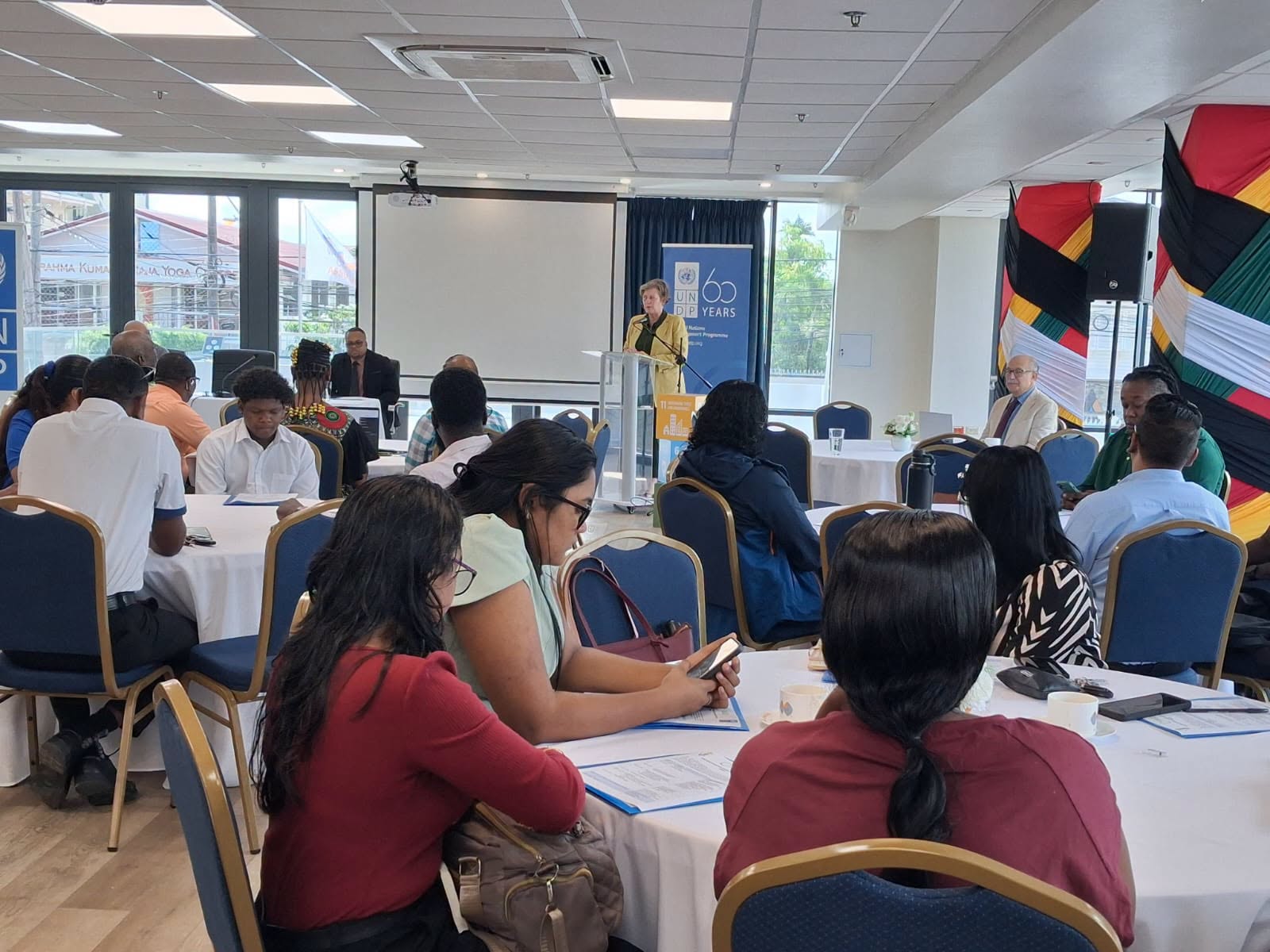
–as Experts Warn of Rising Waste Pressures
-by Celestine Chacon
As Guyana moves to strengthen its waste management system, a workshop on the Development of the National Solid Waste Management Strategic Plan was convened today at the World Trade Centre in Georgetown.
The event brought together government stakeholders, local authorities, and private development partners.
The workshop is a collaborative effort between the United Nations development program and the local government ministry which aims to build a coordinated national framework for sustainable waste management in Guyana.
Resident Representative of the UNDP, Kathy Thompson, reaffirmed the agency’s strong support for the project, stressing that the timing is critical.
She noted that rapid population growth, changing consumption patterns, and increasing environmental pressures are pushing existing waste systems beyond their capacity.
“A well-managed national solid waste management strategic plan really helps governments to move forward in a forward-looking way, and the goals of this is that once it’s done, it complements the legislative efforts, such as this solid waste management bill here in Guyana, which is being finalized, and it helps to streamline and make legislation a reality for all ordinary people,” she said.
Presenting a technical overview of the proposed plan, UNDP consultant Dr. Guillermo Roman outlined the scale of Guyana’s growing waste challenge.
“The first the municipal solid waste, according to this data we have for world worldometer, is about half a million ton per year, 400,000- 460,000 but the Hazardous waste it is about 1/3 of that,” he said.
When industrial waste streams such as mining residues, agricultural by-products, and electronic waste are included, total waste generation could reach several million tons per year.
He also identified plastic waste as a major concern, noting that global recycling rates remain very low, meaning most plastic waste is not recovered or reused.
Looking ahead, projections indicate that waste volumes could rise significantly over the next decade, driven by population growth and the expansion of key sectors such as oil, agriculture, and mining.
The expert emphasised the need for improved waste characterization, stronger landfill design standards, and better regional data collection systems to support planning and enforcement.