admin
admin
-by David Clarke
Guyana’s economy continues to record rapid growth, with the country’s expanding oil sector complemented by strong performance across the non-oil economy.
President Irfaan Ali has made reducing food prices a priority, but as government responds to cost-of-living pressures, economists say it must also balance short-term relief with prudent management of the economy.
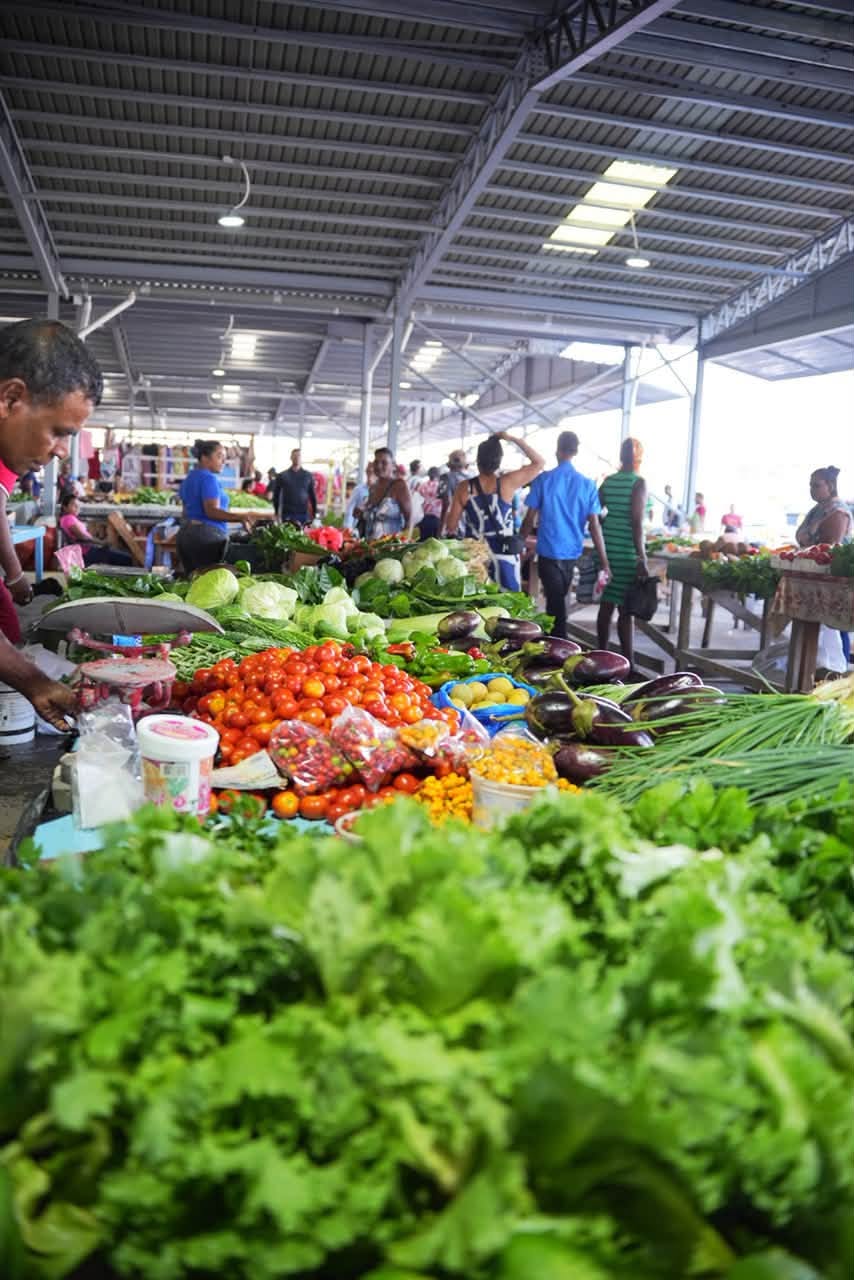
But as the economy expands, government is also focused on ensuring that households feel the benefits, particularly through efforts to reduce the cost of food and other essential goods.
President Irfaan Ali has repeatedly committed his administration to bringing down food prices and easing cost-of-living pressures.
Economist Richard Rambarran says government’s ability to respond to these pressures is an important part of managing a rapidly growing economy.
“Secondly, you have the prevailing economic reality that exists. A country and its government must be able to be flexible and adjust and adapt to what is happening within its national landscape. So, for example, cost-of-living crises or cost-of-living hikes. Government must have the appropriate fiscal space and tools to be able to respond to it. And then, thirdly, there is the long-term and prudent macroeconomic management,” he said.
Rambarran says the country’s growth story is not based on oil alone, with the non-oil economy also recording strong expansion.
“If you look at where the funds are going, you’ll note from 2020 to now how the disaggregation of our expenditures associated with the budget, how that is. You’ll find that capital expenditure has continuously expanded in an exponential way, whereas we have increased recurrent revenue in a more gradual way,” he said.
As government works to sustain this momentum, measures aimed at reducing the cost of basic goods remain a key priority.