admin
admin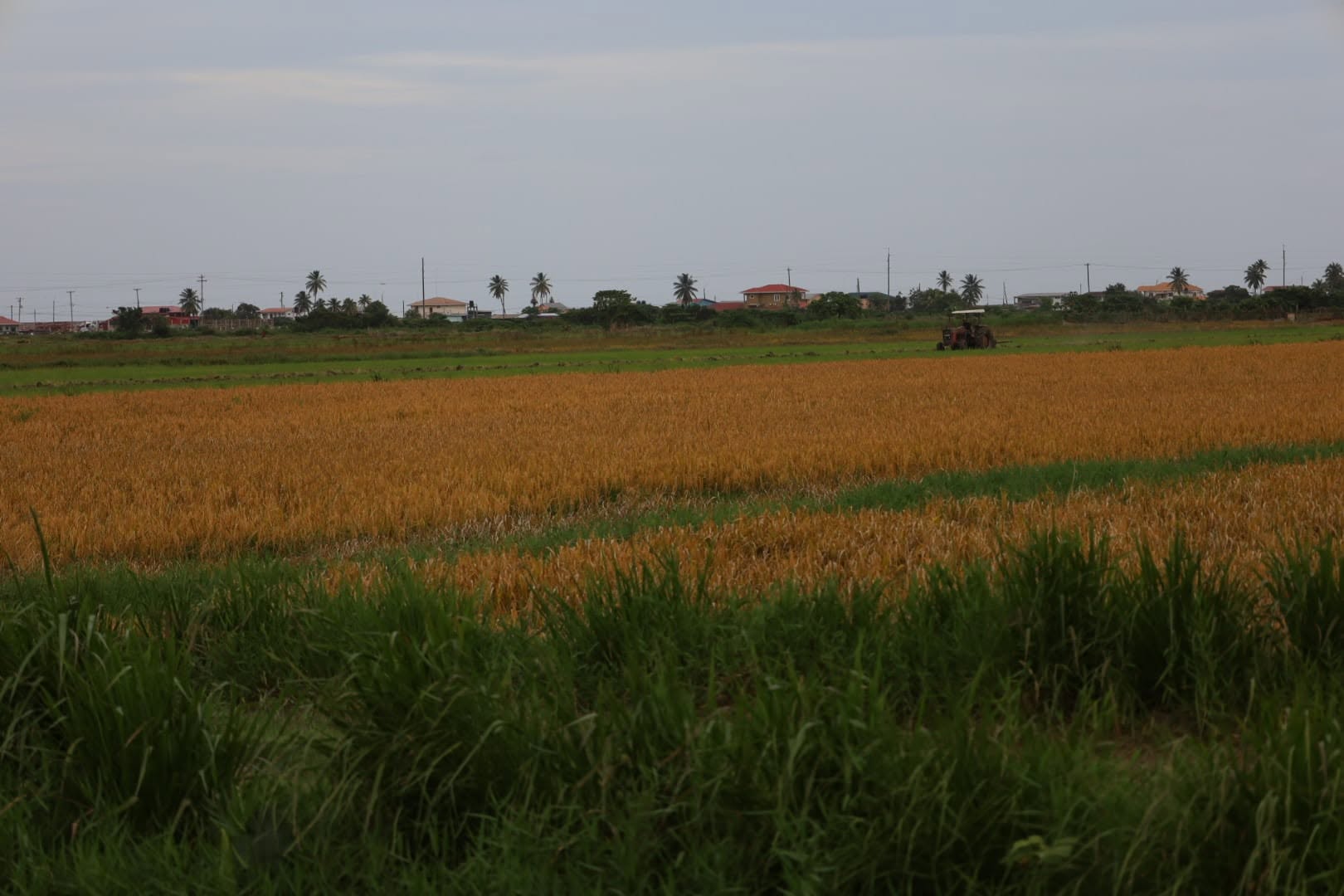
-by David Clarke
Guyana’s agriculture, forestry and fishing sector contracted marginally in the first half of 2026, as excessive rainfall disrupted crop production.
However, the Mid-Year Report shows growth in several major subsectors, including sugar, rice and livestock.
And with a drier second half of the year expected, government is also focusing on reducing production costs and strengthening climate resilience.
For Guyana’s farmers, weather has been a defining factor in production this year.
The Mid-Year Report estimates that agriculture, forestry and fishing contracted by zero-point-five percent in the first half of 2026.
President Irfaan Ali explained that the main drag came from the cash crops subsector, which declined by six-point-four percent as above-normal rainfall disrupted planting, damaged crops and restricted access to fields.
“The agriculture, forestry and fishing sector, as you know, facing the same difficulties and challenges the region is facing in terms of transportation, logistics, increased costs of input like fuel and all of these things, had a marginal contraction of 0.5% in the first half of this year,” he said.

The Mid-Year Report says government spent $40.8 billion of the $113.2 billion agriculture budget during the first half of the year.
The spending is aimed at diversification, increased production and exports, lower production costs, improved technology and climate-smart agriculture.
“Continued expansion of the controlled environment agriculture program which is shade houses, the green houses, the hydroponics which can yield up to 90% more output. We have the opening up of a 100,000 acres of new arable land, the expansion of our DNI program,” he added.
The measures are part of a broader push to increase production while making agriculture more resilient to changing weather conditions.
With the first half of the year marked by excessive rainfall, the focus now shifts to protecting production and maintaining output as conditions change.