admin
admin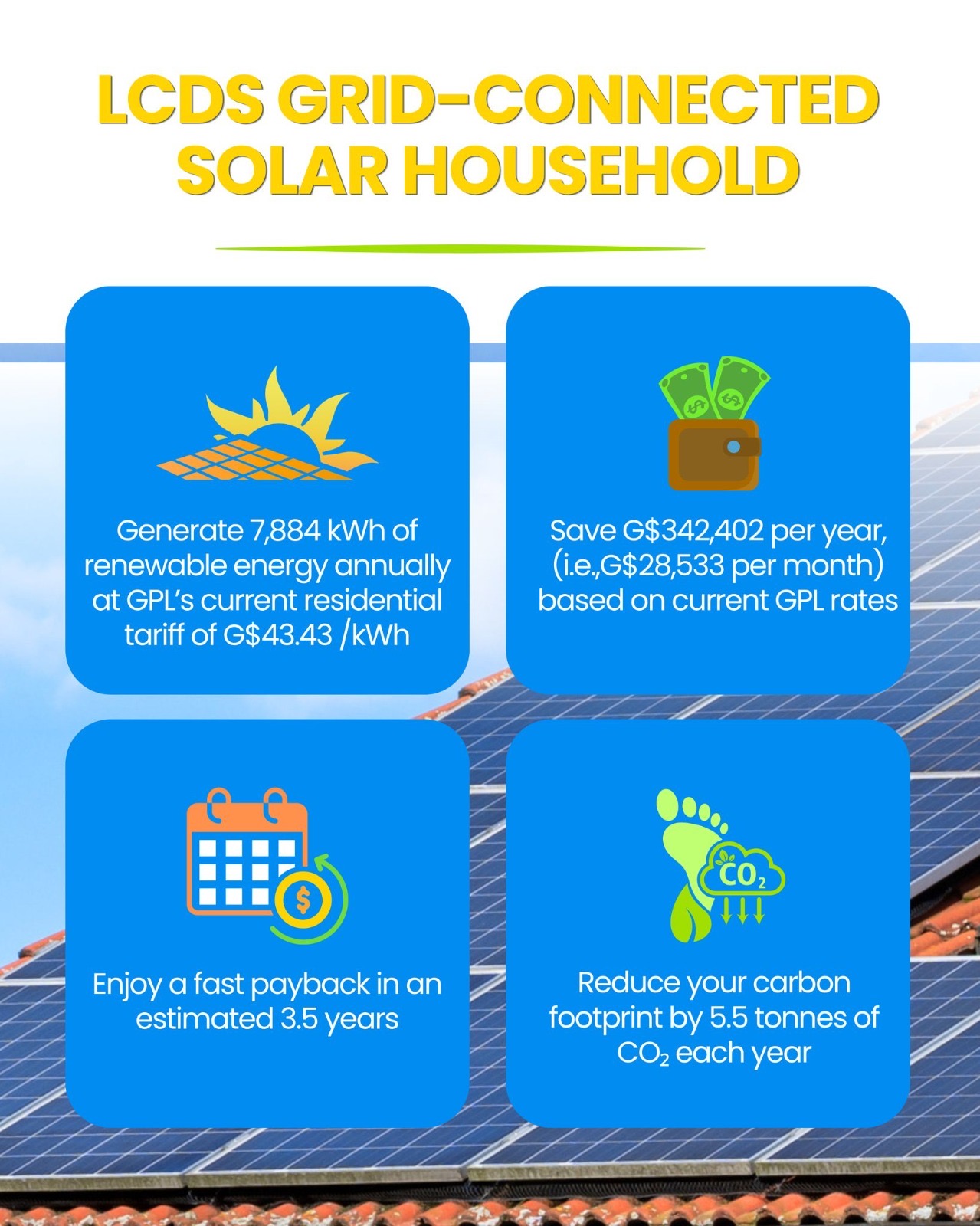
-Under Low Carbon Strategy
-by Kimberly Giddings
Under the Low Carbon Development Strategy 2030, Guyanese households can now benefit from grid-connected solar systems, reducing electricity bills while accessing clean, renewable energy and earning credits for excess power.
Speaking on the NCN programme Guyana Today, Chief Executive Officer of the Guyana Energy Agency, Mahendra Sharma, said the campaign is designed to simplify the process by providing technical guidance every step of the way.
The initiative aims to educate and support residents in installing solar panels and connecting directly to the Guyana Power and Light grid. Grid-connected solar systems allow homeowners to generate electricity from sunlight to power their homes, while sending any excess energy back to the power company for credit.
“We need to make sure that you have enough room space. We’re going to connect you to a group of installers. The GEA is not installing on our own. …… You get a quotation from an installer. They help you to decide on what size of system you want. We can help review the quotation. We can help provide you support on the design, making sure that you’re getting value for money. We’ll help you connect the GPL because you have to complete an application process too. It’s called a billing environment. GPL has to come and…change your meter to provide a bidirectional meter,” he explained.
The Guyana Power and Light has introduced a faster “solar expressway” process to help customers get connected.
A typical system costs about 1.2 million dollars but can pay for itself in under four years through monthly savings.
Financing is available through local banks, and officials say grid-connected systems are more affordable than going fully off-grid due to high battery costs.
“Many people believe that once you have solar, you don’t need GPL and you don’t need anything else. But to come completely off the grid, you need to have batteries. Batteries are quite expensive. So it’s important that people understand that grid connected solar doesn’t use batteries. So if you get the blackout, power goes down. But the value is that you have these very attractive payback periods, low investment costs. And at the end of the day, you’re playing an important part in helping the planet,” he added.
Grid-connected solar systems do not provide backup power during outages. While backup can be added, it requires batteries.
Sharma says customers will be guided through their options based on their needs.
Citizens are being encouraged to sign up early, noting that there is limited capacity for connections in each area, making it a first-come, first-served process.