admin
admin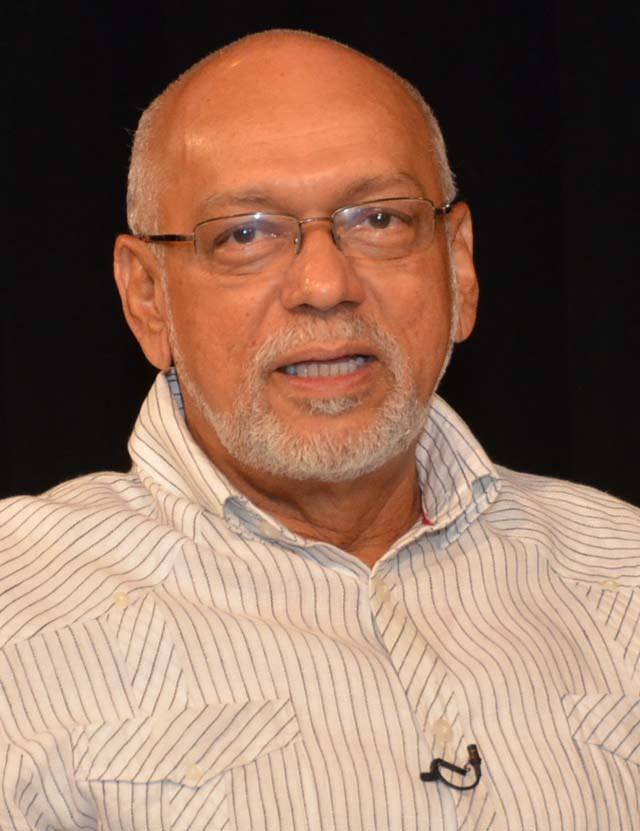
-by Nakasia Logan
Former President Donald Ramotar is urging citizens to reflect not only on the achievement of freedom in 1966, but on the generations of struggle that made it possible. He said Guyana’s independent story did not begin with the hoisting of the golden arrowhead, but through great sacrifices and the fight to free both the country and the minds of its people.
As Guyana looks back at six decades as an independent nation, he said citizens must take courage and inspiration from the struggles of the first and second generations of the People’s Progressive Party, whose efforts helped shape the country’s journey towards self-determination.
The former President Ramotar reflected on the long road to nationhood, noting that before formal independence, workers, trade unionists and ordinary citizens were already challenging colonial authority. He said stalwarts such as Hubert Nathaniel Critchlow and the victims of labor uprisings at Leonora and the Enmore martyrs, became enduring symbols of resistance and working-class struggle that led to the strength of the union movement.
“When at Leonora, workers were killed fighting to have a union to recognize them, to work with them. And of course, we had the Enmore martyrs, which I believe was a very important struggle that really brought independence forcefully on the agenda of this country. Each period produced its fighters and its heroes. And it was in this milieu that Cheddi Jagan came on the political scene,” he said.
Ramotar explained that the former President Dr. Cheddi Jagan entered politics during a period of global anti-colonial movements and labor struggles, experiences that would later shape Guyana’s political direction. But he also reflected on the divisions that threatened the independence movement.
“In our country, race was the weapon that was used to try to weaken and to divide the movement in our society, some of which we’re still suffering from. I think we’ve gone a far way since then. But I still think we have a ways to go in cementing that unity,”
In the years leading up to independence, the PPP also sought to reshape how Guyanese understood themselves and their history. Patriotic songs were introduced into schools, adult education expanded, and programmes were launched to free Guyanese from colonial thinking.
Ramotar recalled that school lessons once celebrated colonial governors instead of national heroes like Kofi.
“I still vaguely remember that when we read some little bit of history that we used to read in school, not very much. And we studied, let’s say, the 1763 uprising. The hero in those times was the governor, the Dutch governor was the hero and not Kofi. And we started to change that from 1957 until we understand our own history, our own struggle.”
As Guyana celebrates 60 years of independence, Ramotar’s reflections serve as both a celebration of the country’s progress and a reminder that the story of independence is still being written.