admin
admin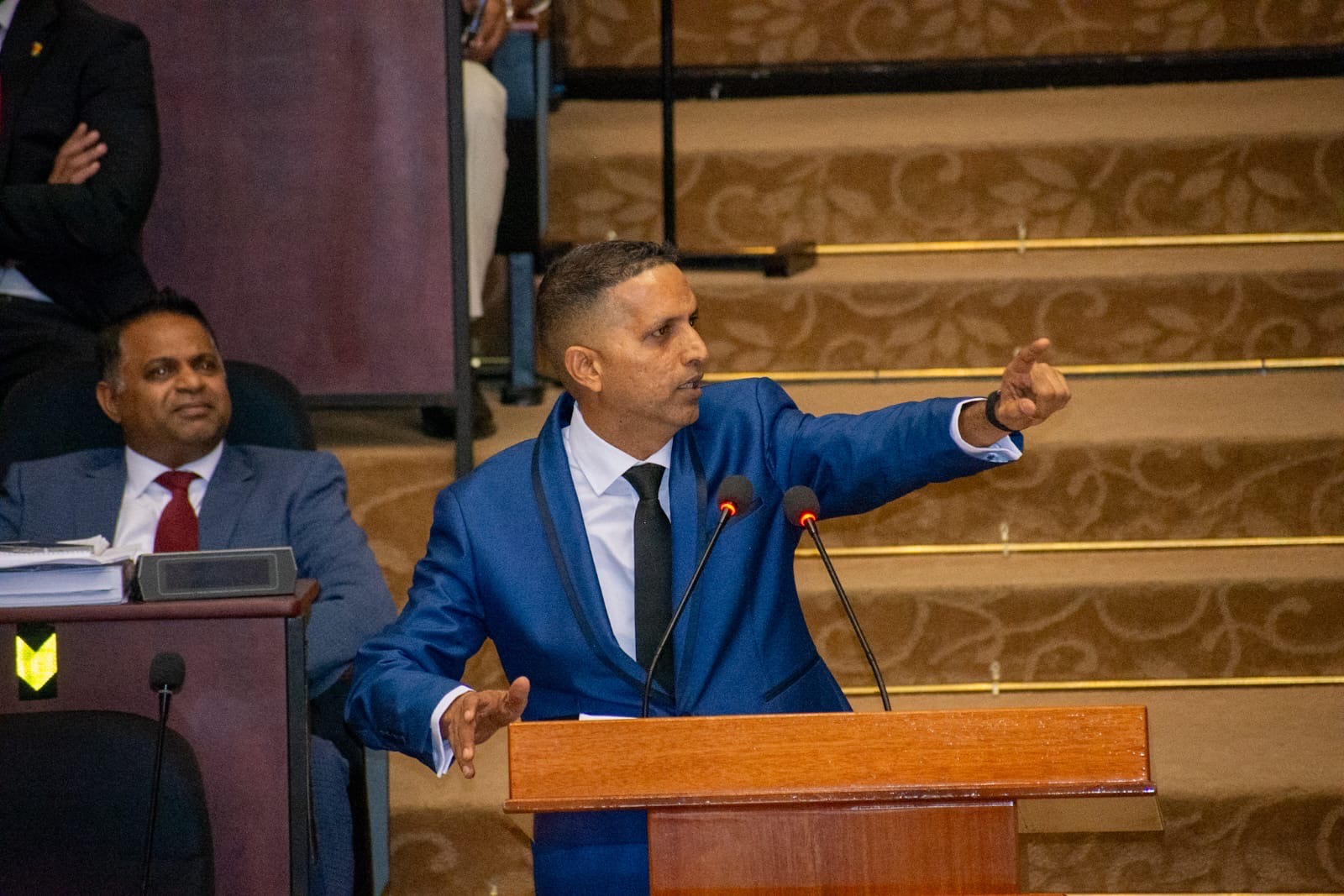
Minister within the Ministry of Agriculture, Vickash Ramkissoon has said that the sugar industry and its workers have been major contributors to the nation’s development and as such deserve continued respect, support and protection.
The minister was at the time drawing a contrast between the Coalition government’s treatment of sugar workers and the treatment that the workers and the industry received under the PPP/C government.
He recalled that the sugar levy imposed in 1974 generated substantial revenue that was used for nation-building rather than retained by estates.
Minister Ramkissoon reminded the National Assembly that for decades the sugar industry was the primary source of foreign exchange and social stability, noting that the sugar workers for centuries, even before this nation was independent, fought the struggle for this nation and provided the resources to build the country’s infrastructure through the sugar levy.
“It is respect, honor and dignity, all that we are asking for them to live with,” the minister stated, adding that under this budget, “the sugar workers will stay on their jobs right there in GuySuCo.”
He noted that during the late 1970s and early 1990s, the industry contributed as much as 25 perc ent of the national budget, emphasising that the current support is a small fraction of what the industry has given back to Guyana.
It is against this backdrop that the minister asserted that the administration views the industry not merely as a business but as a vital socio-economic pillar that supports thousands of families and maintains critical drainage and irrigation networks.
In Budget 2026, the government has allocated $13.4 billion to the sugar industry. This investment is part of a broader $113.2 billion agriculture sector budget and is aimed at transforming GuySuCo into a profitable agro-industrial hub by 2030.
Minister Ramkissoon also highlighted record-breaking achievements in the rice sub-sector, which saw a historic production of over 810,000 metric tons in the previous year. He attributed this success to strategic planning rather than luck, telling the House that progress and prosperity does not happen by magic but through executing and hard work.
“The agricultural industry is seeing that kind of progress and development because we are not considering this industry private business,” he told the House.
The agriculture allocation also provides for innovative measures such as the rollout of crop insurance to mitigate the risks of climate change for farmers.