admin
admin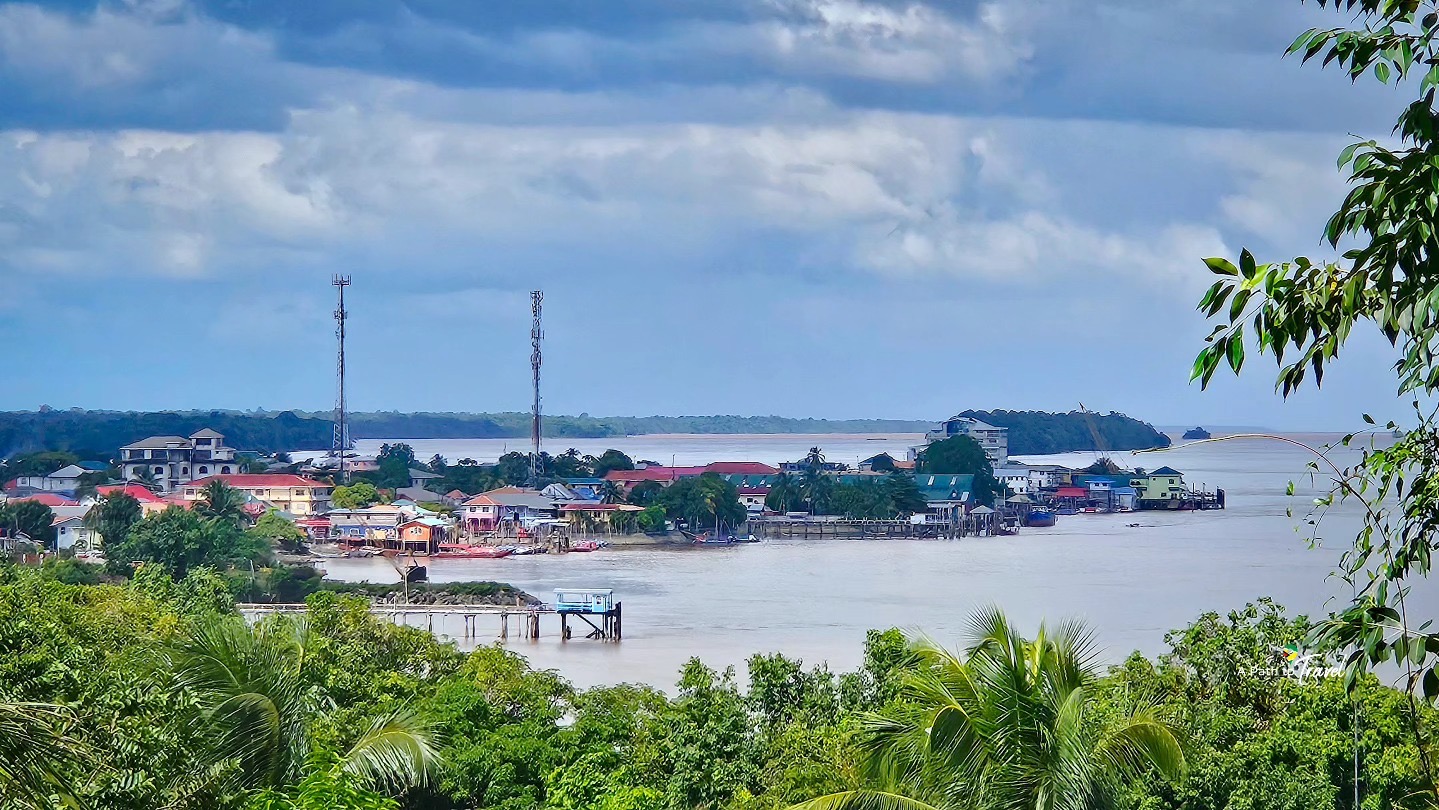
The landscape of Bartica and the wider Region Seven is undergoing a historic transformation as the government pumps more than $150 billion into the local economy, transforming Bartica from a quiet gateway into a high-powered regional capital.
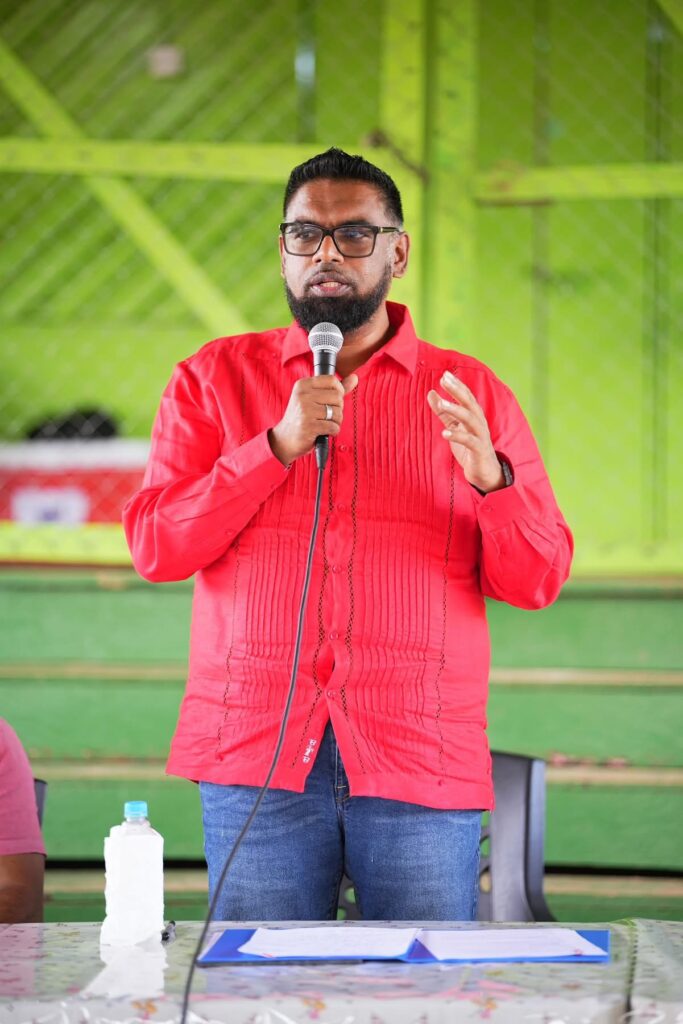
Speaking during a live broadcast of ‘Tea on the Terrace’ on Wednesday morning, President Dr Mohamed Irfaan Ali revealed that the region’s small and medium-scale miners alone generated a staggering $88 billion in revenue in 2025, accounting for 41 per cent of national gold production. This production, led by a declaration of over 105,400 ounces of gold, provided direct or indirect employment for more than 20,000 people.
President Ali emphasised that these are numbers fuel a wide range of secondary industries, including banking, mechanical engineering, and hospitality.
“In the last five years alone, we have 10 new quarries operating in Region 7. Generating thousands of new jobs. Creating opportunities. To add to the quarrying sector, we have forestry: 95 small concessions and 11 large concessions. 4.3 million acres of concession land. Generating, again, thousands of opportunities. In one new company, Oko West, as of December 2025, they would have already employed almost 900 persons. And by October 2026, they are projected to employ 2,200 persons here in Region 7. That is what the development translates. That is what the investment translates,” he said.
The government has implemented critical fiscal incentives such as zero excise tax on fuel and significant tax concessions to support the development of this industry.
For additional support, the government is exploring the construction of new airstrips and a bridge across the Puruni River to replace the current barge crossing.
The president detailed how the rehabilitation of the Bartica, Potaro, and Puruni roads now supports the movement of over 2 million tons of quarry material annually.
“We have more road development, drainage development, solid waste disposal, expansion of the electricity system, expansion of the water treatment. Making Bartica a service hub, a service center for mining, forestry, and riverine communities. Making Bartica a transport hub linking river, road, and air,” President Ali added.
During a recent visit to Bartica and Puruni, the president engaged directly with hundreds of miners to address the practical hurdles they face, specifically regarding land disputes and financial inclusion. He announced a plan to introduce a standardised contract to govern arrangements between small miners and large landholders, providing legal protection for smaller operators.
In a move to bring services directly to the people, teams from government agencies and commercial banks are scheduled to be dispatched to the region within the next three weeks to assist miners with opening bank accounts and securing digital identification.
The transformation extends well into the town’s infrastructure and social services. Residents are already benefiting from the new $553 million Bartica Stelling and a 1.5-megawatt solar farm that has significantly reduced electricity costs. Further developments on the horizon include a brand-new level four regional hospital, which will function as a referral facility to reduce the need for medical travel to Georgetown.
Furthermore, the government has invested approximately $1.7 billion in water infrastructure in the region to empower more than 16,000 residents with access to treated water.
“When you look at that, the average investment for every single citizen in just water is $105,000 per person. The Bartica water treatment plant alone costs about $635 million, which now secures safer treated water for 6,000 residents. What this means is fewer waterborne illnesses, lower health care costs, better quality of life. Comfort is not a luxury, it is a foundation for development,” the head of state underscored.