


-as Guyana launches revised laws, law reports
President Dr Mohamed Irfaan Ali has challenged the Attorney General’s Chambers to move beyond traditional searchable websites and embrace a deep AI backbone for legal research.
He reasoned that as the global economy digitises, it is now fundamental for citizens to have an interactive platform through which they can become better acquainted with the law.
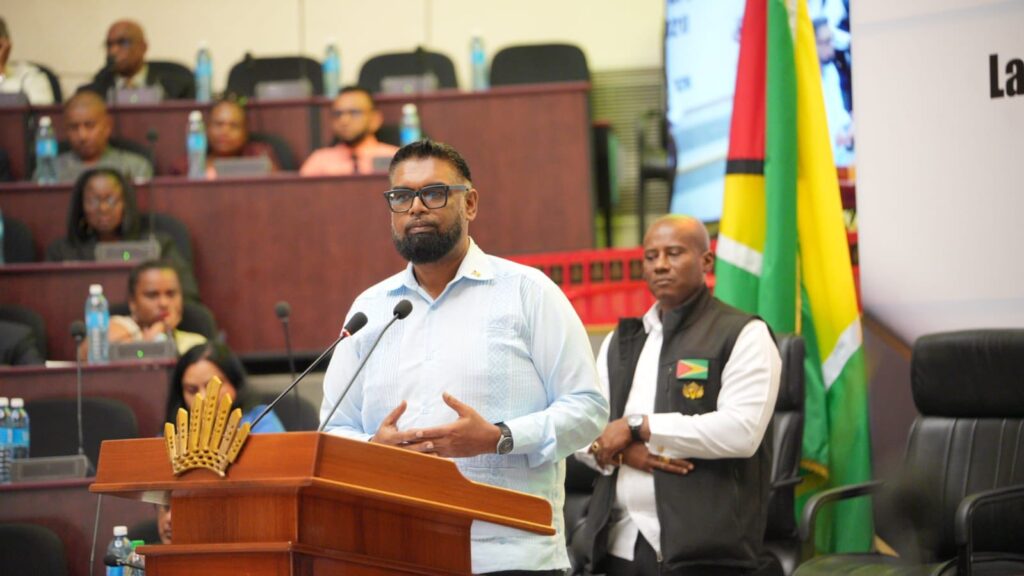
He emphasised that the law must be treated as a living entity that adapts to the technological environment in which it is practiced.
“The days of searchable website are long gone, unfortunately. The websites now must be interactive, must be able to have an interactive platform through which people access information with a deep AI backbone. That is no longer a luxury, but part of a revolutionised system that will allow us to address the emerging issues of technology and digitisation,” he stressed.
President Ali was at the time speaking at the launch of the Revised Laws of Guyana (as at December 31, 2022) and the Law Reports of Guyana spanning the period 2008-2021.
The revised laws of Guyana consolidate all statutes to reflect legislative changes through the end of 2022. The accompanying law reports compile judicial decisions from the High Court, Court of Appeal, and Caribbean Court of Justice spanning a 13-year period.

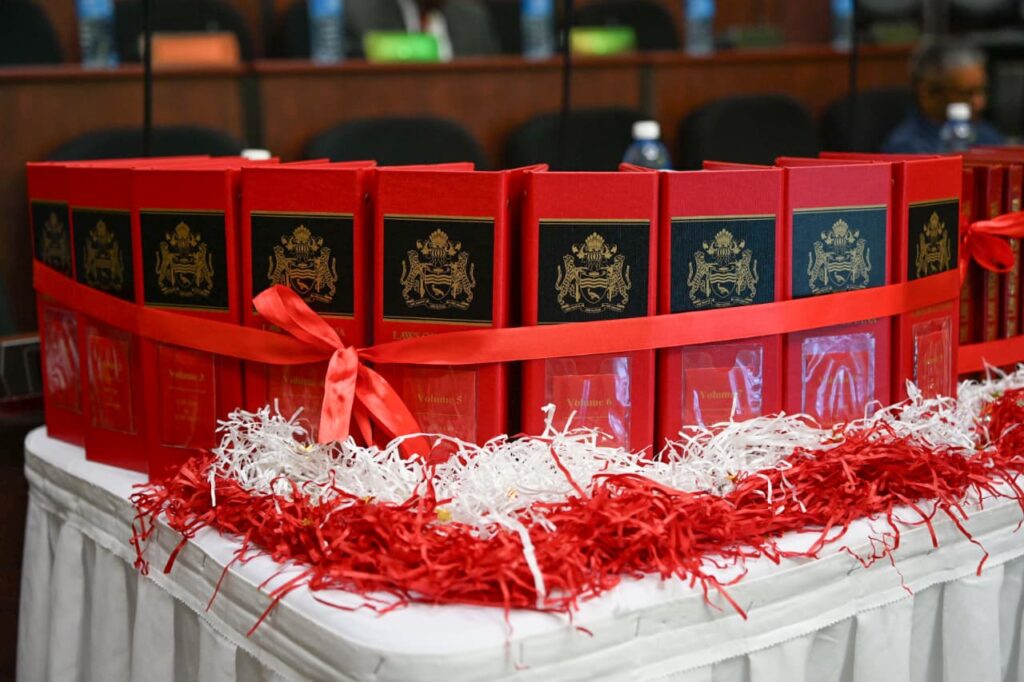

President Ali commended the AG’s Chambers and the stakeholders on this landmark achievement, which promotes a more transparent and efficient judicial system.
He noted that the next phase of development must focus on breaking down the barriers of geography and complexity.
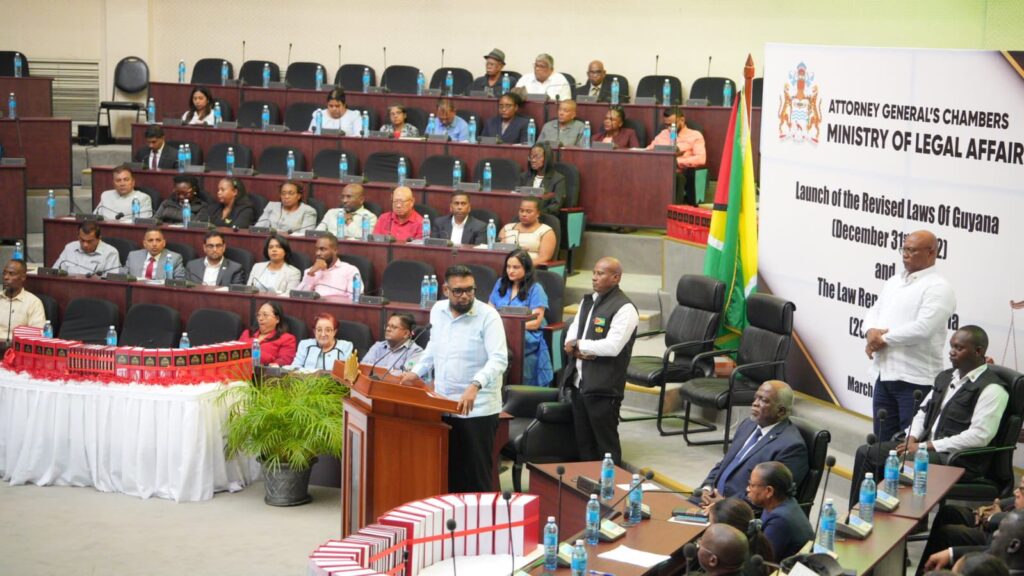
The head of state envisions a system where legal knowledge is not confined to elite libraries or expensive chambers but is available at the fingertips of students, lawyers, and the public.
“A law that cannot be found has no practical value. A law that is outdated cannot be relied upon. A law that is applied differently depending on who you are undermines justice itself. A hidden law is no law. An outdated law is an unreliable law. An inconsistently applied law is an unjust law,” the president said.
He added that this development would align with the country’s technological shift, as seen through the recent implementation of e-ticketing and smart camera systems.
The president argued that the legal framework must provide a predictable path for these advancements to succeed, and must be aligned with modern economic trends.
“Lawyers and laws must be relevant to the development trends, shift, and functionality of the economy and where we are going. We are now embarking on a project to have someone review the laws to deal with our criminal justice system throughout the region because we are talking about a common approach to transnational crime, regional crime, and crime fighting and there is a differentiated benchmark through which we are developing a common approach,” he explained.