admin
admin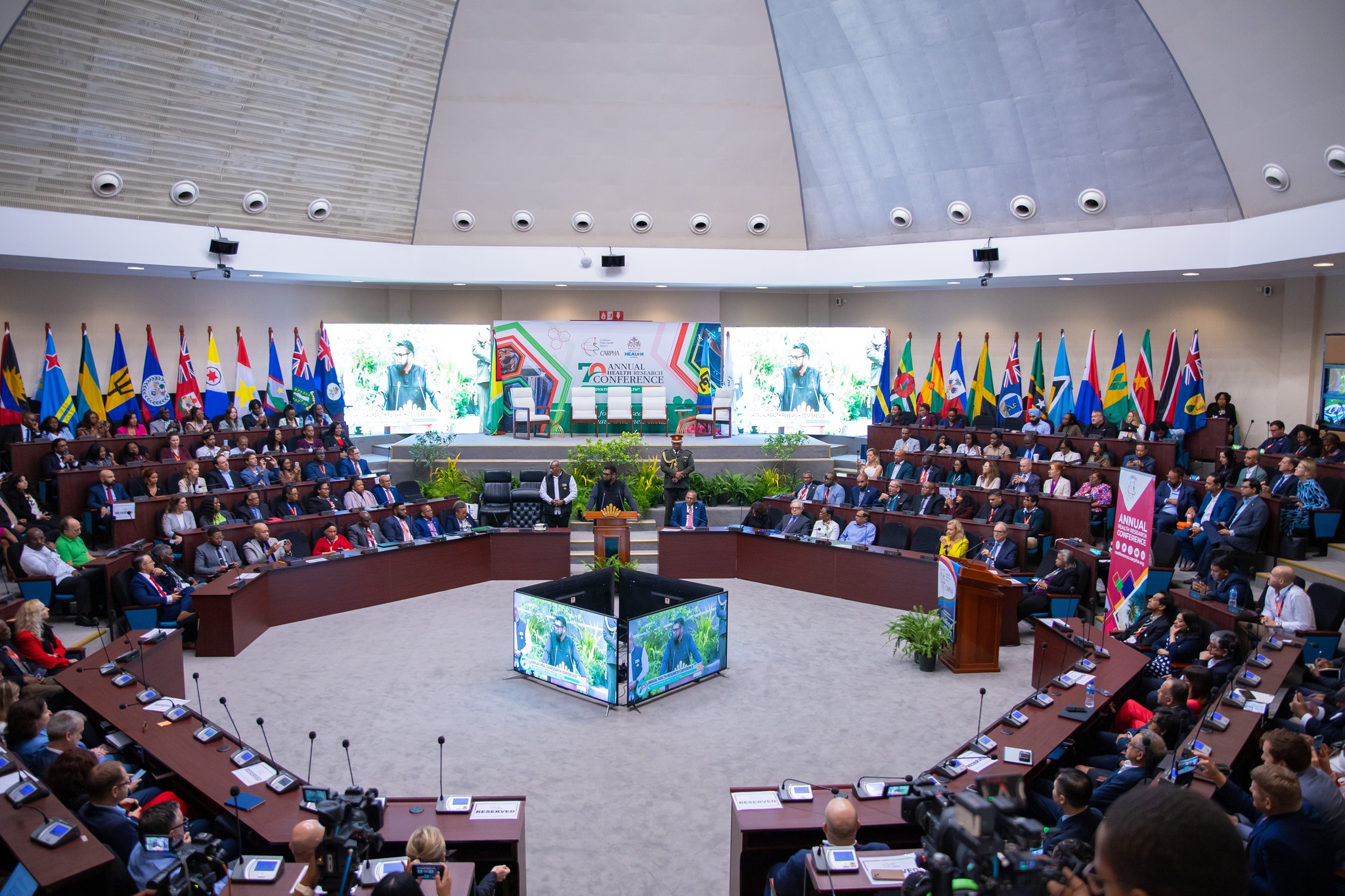
-says Guyana prepared to play leading role
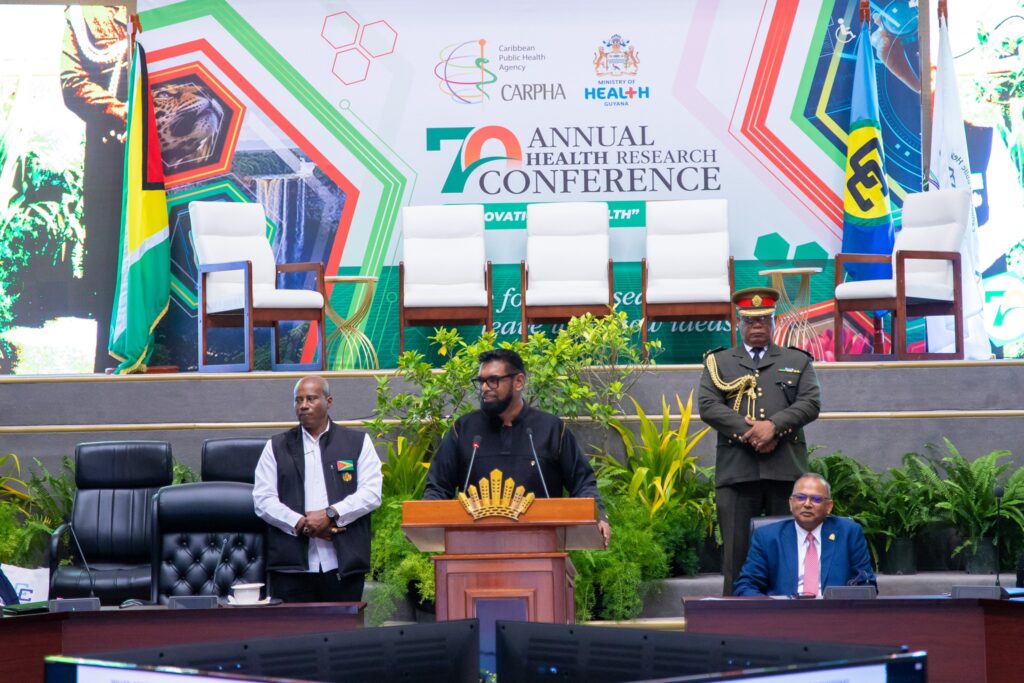
President Dr. Irfaan Ali is calling for urgent reforms to modernize Caribbean health systems, noting that Guyana stands ready to play a pivotal role in supporting these initiatives.
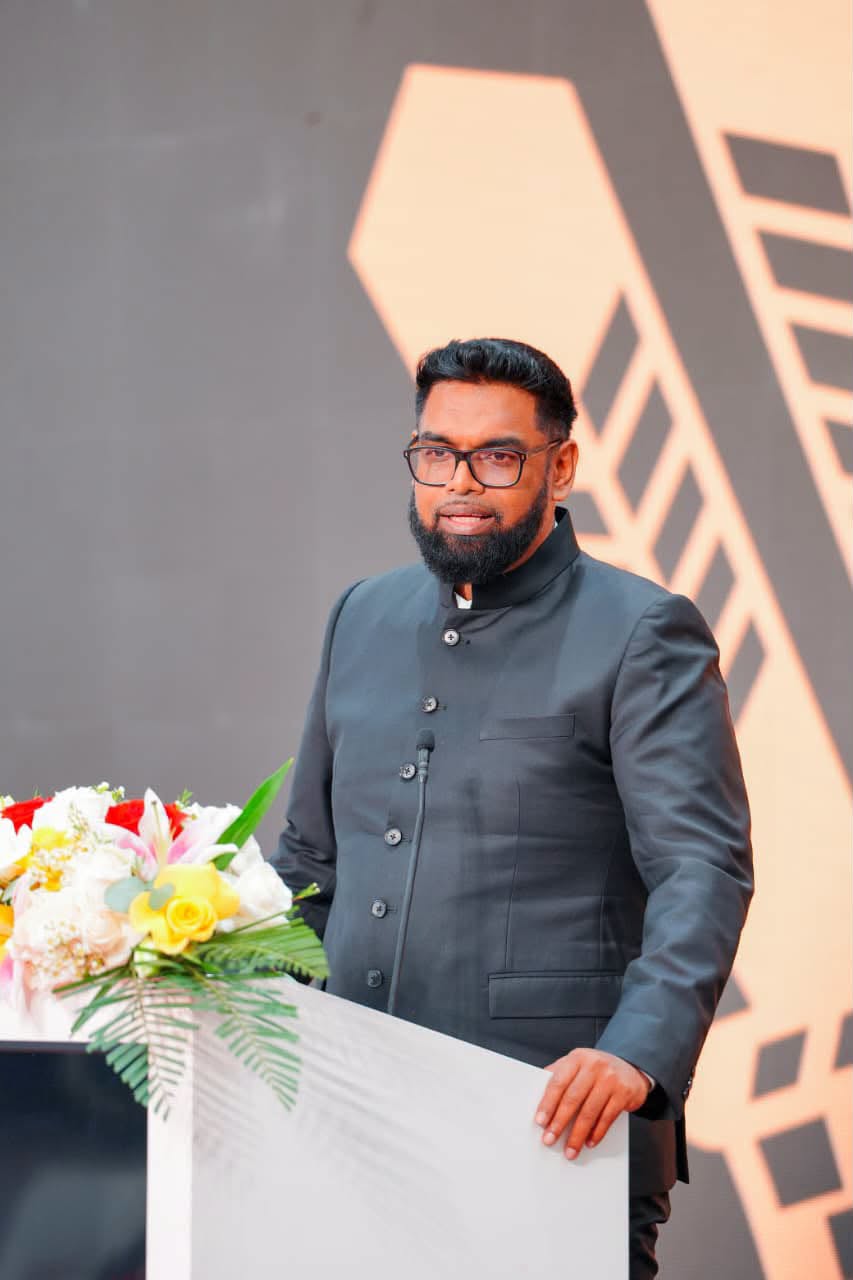
He made the call at the opening of the Caribbean Public Health Agency (CARPHA) Annual Health Research Conference.
CARPHA’s 70th Annual Health Research Conference opened at the Arthur Chung Conference Centre to much fanfare today.
While addressing regional health leaders, the president stressed the need to move beyond traditional healthcare and build a “world-class health ecosystem”.
This is one that integrates technology, data, legislation and human resources to improve outcomes, ensuring that enhanced patient care and efficiency remain a top priority.
However, he cautioned that many systems remain constrained by outdated policies, weak implementation strategies, and limited human capital.
“The problem I want to suggest, is no longer the lack of ideas, its shortage of systems that can absorb, govern, fiancé and scale those ideas fairly. In many ways, the frontier of global health innovation has shifted. It is no longer defined primarily by intervention alone, but by institutional capability,” he said.
President Dr. Irfaan Ali said technologies like telemedicine and artificial intelligence are already improving healthcare access in Guyana, particularly in remote areas.
However, many regional initiatives fail to progress beyond pilot stages. The Head of State went on to offer Guyana’s assistance in helping the region pilot similar projects.
For instance, he noted Guyana’s potential to be a telemedicine hub, which can help address regional shortcomings.
“We have to fix it and we are pilot size and with the political will we can fix this in a day. The models are all there, we can gather all the best lawyers in the region, parliamentary councils and match them with the regulators and come up with one mater legislation that the region can implement as a whole,” he said.
The President also underscored the importance of investing in people, noting that human capital remains the biggest barrier to innovation. He pointed to ongoing efforts, including a US$30 million STEM initiative supported by ExxonMobil, aimed at strengthening future capacity in science and technology.