


-by Tracy Romalho
Prime Minister, Brigadier (ret’d) Mark Phillips, recently outlined the long-term economic strategy underpinning the second phase of the Gas to Energy project, including the establishment of a gas bottling facility and a fertiliser plant.
Last year, the Government of Guyana sent out Requests for Proposals for a gas bottling facility that will be powered by Phase Two of the Gas to Energy Project. In a recent interview on the Starting Point Podcast, Prime Minister Phillips explained what the building of this facility will mean for Guyana’s economy.
“It means that we will be bottling gas and distributing to the people of Guyana at a far lower cost that they are paying right now. It means that we can also market and export the gas to the wider Caribbean based on the production capacity that we envisaged,” the PM said.
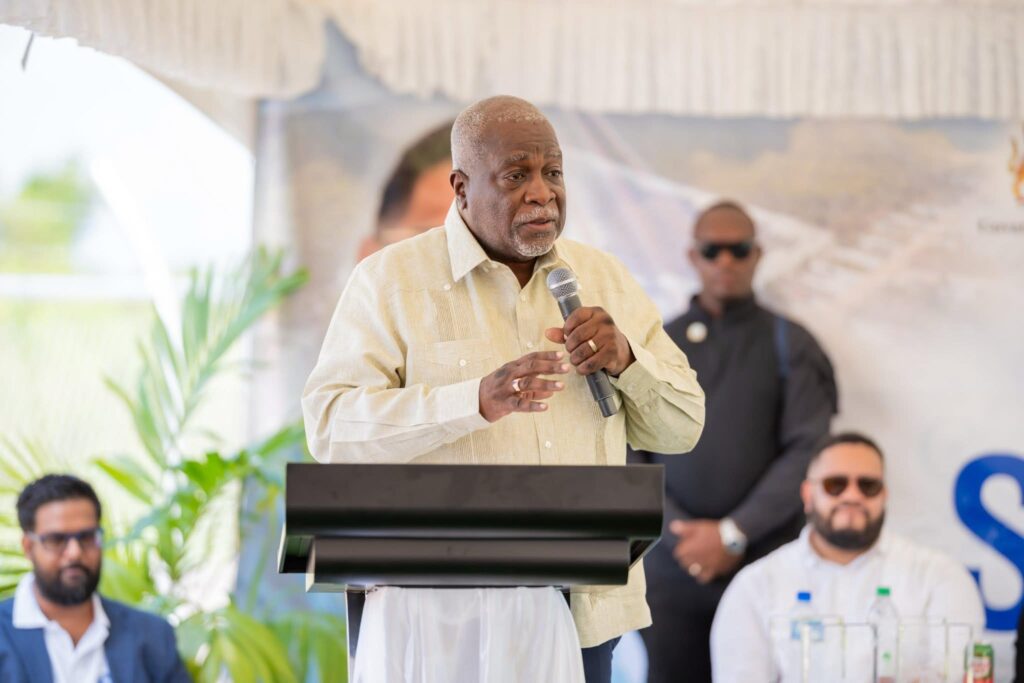
Turning to agriculture, Prime Minister Phillips reaffirmed the importance of this sector to Guyana’s economy even with the rapid growth of the oil and gas sector. Phillips highlighted high fertiliser cost as a major challenge facing farmers, stressing that local production would deliver a more sustainable, long-term solution.
“Having a fertiliser plant onboard in another couple years down the line means we will have enough fertiliser to satisfy our farmers and at a far cheaper cost than they are paying now and also whatever excess is also available for export to the wider Caribbean.”
This plant comes even as the government has already been intervening to cushion farmers from rising fertilizer prices, such as with subsidies and free fertiliser. Once farmers’ input costs are lowered, it is envisioned that the savings will be passed on to consumers amid the global cost-of-living increases.