admin
admin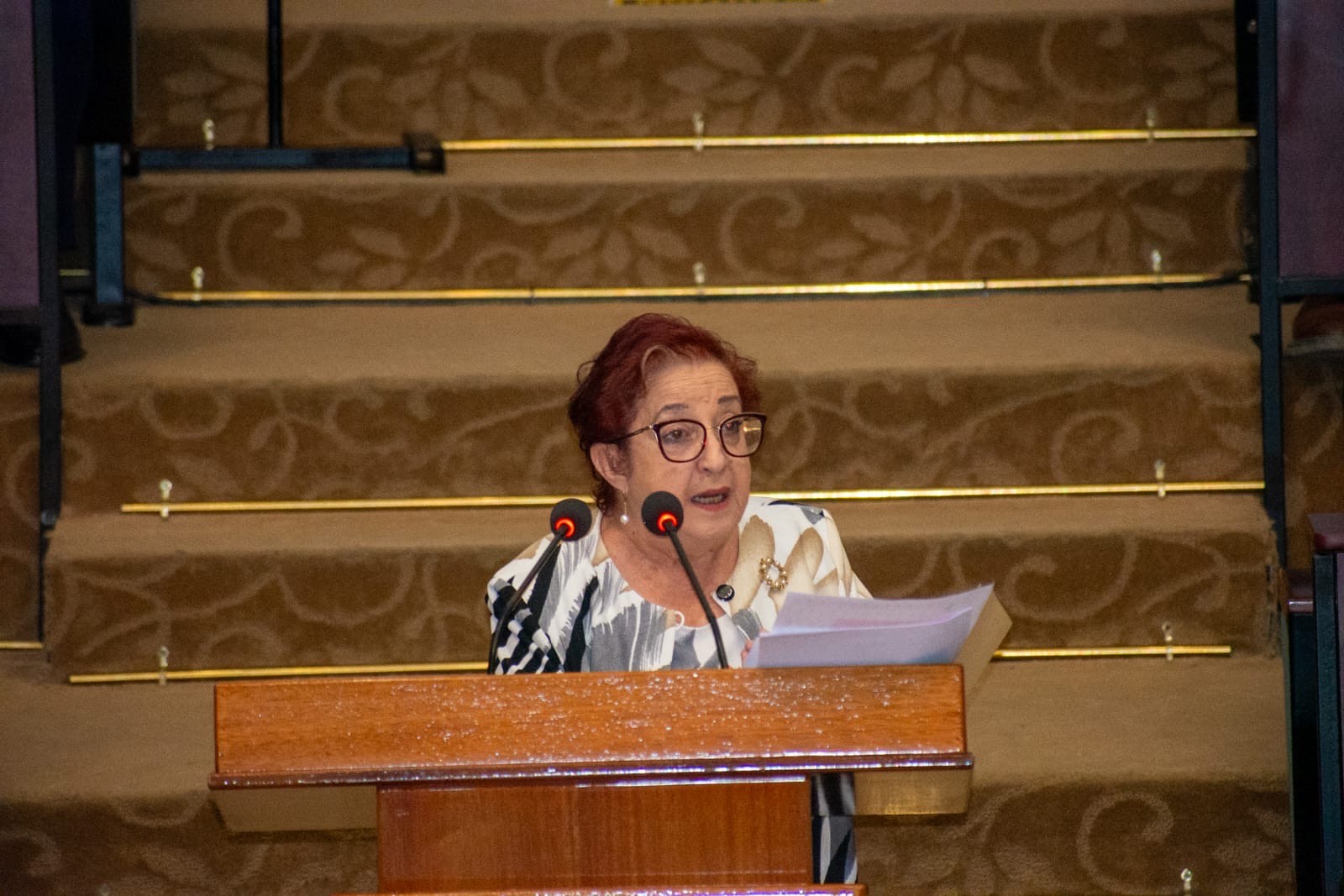
Minister of Parliamentary Affairs and Governance, Gail Teixeira, took to the floor of the National Assembly on Friday to push back against opposition narratives of widespread deprivation.
Reflecting on her 34th budget debate, the veteran politician bridged the gap between Guyana’s difficult economic past and its current transformation, arguing that the country’s consumption data tell a story of rapid upward mobility that transcends political rhetoric.
“I am proud to see my country move from what it was in the 70s and 80s to what it is today,” Teixeira stated during her impassioned address that garnered support from both government and opposition MPs.
She recounted the days when severe malnutrition plagued children in Georgetown and rural areas alike. She noted that by 1985, roughly 57 per cent of Guyanese children suffered from malnutrition, a stark contrast to the modern era of food security and infrastructure.
“If you don’t know where you come from, you don’t know how far you reach, and you don’t know where you’re going,” she told the House.
The parliamentary affairs minister further dismantled the opposition’s citing of an international report stating that 58 per cent of Guyanese live in poverty, arguing that the data used was outdated, stemming from the COVID-19 period, and failed to account for modern indicators of social capital.
To bolster her point, she provided concrete numbers regarding the purchasing power of the Guyanese people between 2021 and 2025, noting that 80,551 cars were purchased in that period alone.
“Up to 15 years ago, cars were luxuries. Today, our people are getting opportunities, taxes are relieved, and we are giving people space,” she said.
Detailing the rise in commercial activity, she noted that 16,748 lorries, 8,101 pickups, and 3,280 excavators were purchased over the last four years.
These figures, she argued, represent a massive shift in the ability of ordinary citizens and small businesses to acquire assets and generate wealth, far outpacing the economic activity seen during the previous administration’s tenure.
The minister expressed pride in the 2026 budget, lauding it as a document that represents continuity for a nation that has moved from the lowest-ranking economies in the 90s to a regional powerhouse today.