admin
admin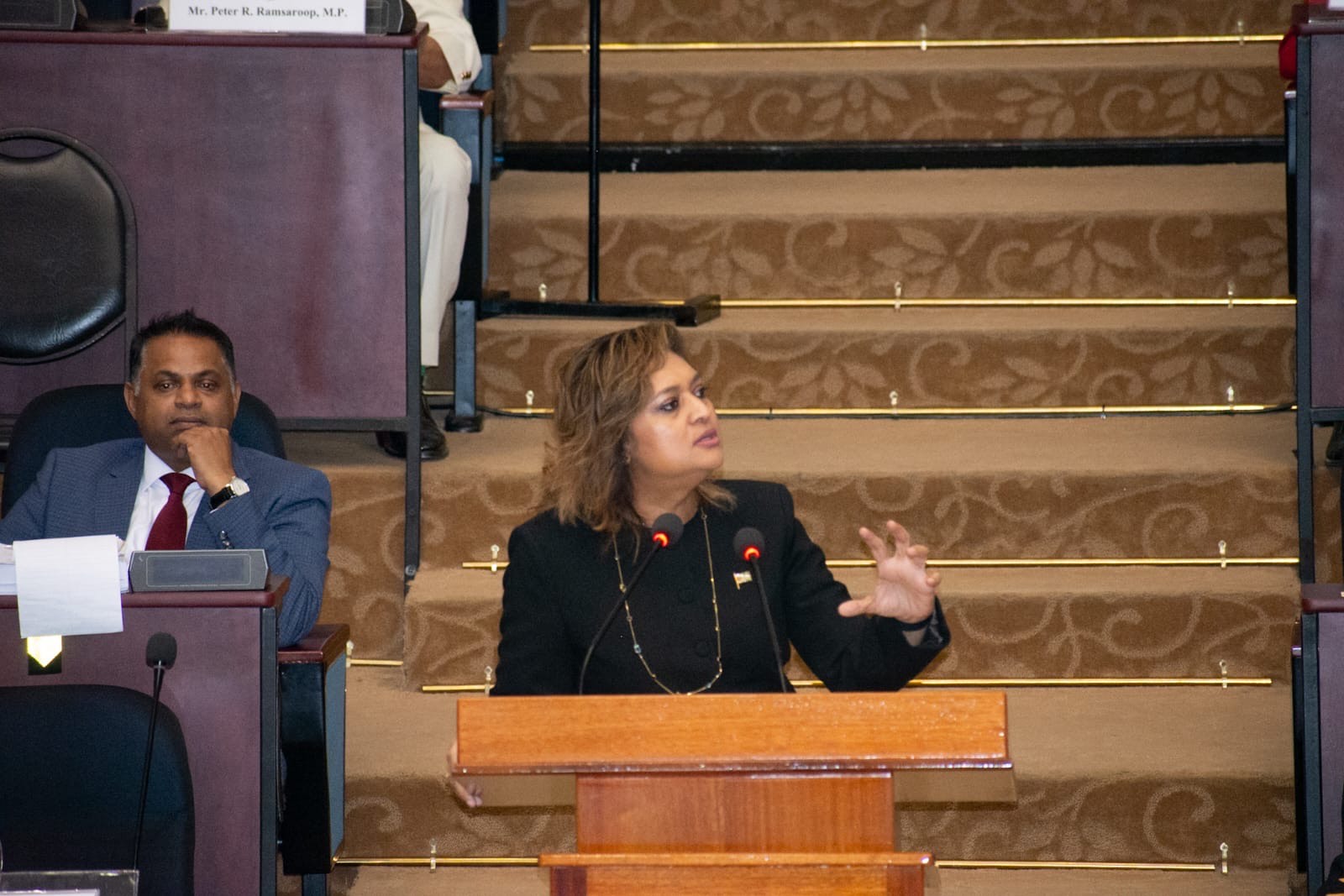
During her defence of Budget 2026, Minister of Local Government and Regional Development, Priya Manickchand detailed the government’s plan for the transformation of Guyana’s waste management systems.
She said that a modern, circular approach will be employed to prioritise cleanliness and environmental health in every community across the ten administrative regions.
Eight new modern landfill sites will be constructed in regions including Zorg en Vlygt, Blairmont, and Mabura. These facilities are designed to transition the country toward sustainable waste practices.
“These landfill sites are going to be modern landfill sites that look at a circular way of disposing of solid waste,” the minister stated, explaining that the strategy focuses on usage, disposal, and reusing rather than simple dumping.
As part of the backbone of this endeavour, the government is also investing heavily in municipal and neighborhood equipment.
For the first time, every single Neighborhood Democratic Council (NDC) and municipality in the country will receive at least one garbage compactor truck to ensure predictable collection.
This hardware will be supported by the procurement of industrial shredders and compactors for marketplaces to better manage the high volume of waste generated in commercial hubs.
Minister Manickchand emphasised that for this transition to a cleaner Guyana to work, there must be a shift in mindset of the people.
“There is an effort, and very soon you will see some young people, who are going to start an NGO that will take across the country into schools, the effort to change out how we deal with solid waste in this country. So this is, it’s not a one moment fix, it’s not buying a truck, it is changing out attitudes, and that’s what we’re going to have to do in the schools, in the homes, in the communities,” she said.
The waste management overhaul is part of a larger $4.9 billion investment into local markets and community spaces. This includes the reconstruction or restoration of major hubs like the Stabroek and Bourda markets, as well as the creation of over 20 new recreational green spaces.