admin
admin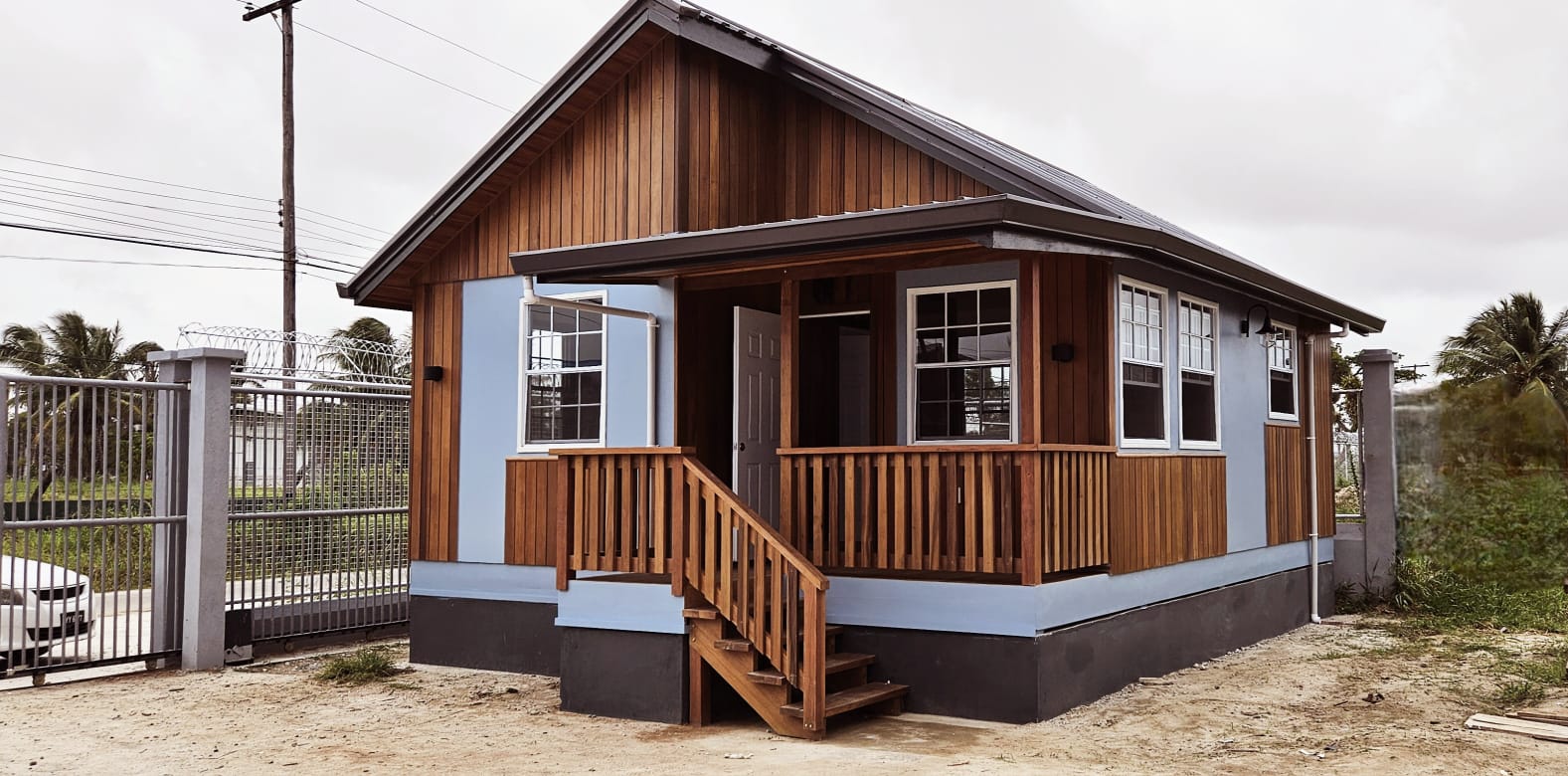
By Jarryl Bryan
The Soesdyke/Linden Highway is a 73-kilometer stretch of road linking Guyana’s Region Four — where much of the total population is concentrated — and Region Ten, where natural and untapped resources abound.
And along that stretch, a community built on renewable energy, sustainable modular housing, and the idea of empowering single mothers is taking shape.
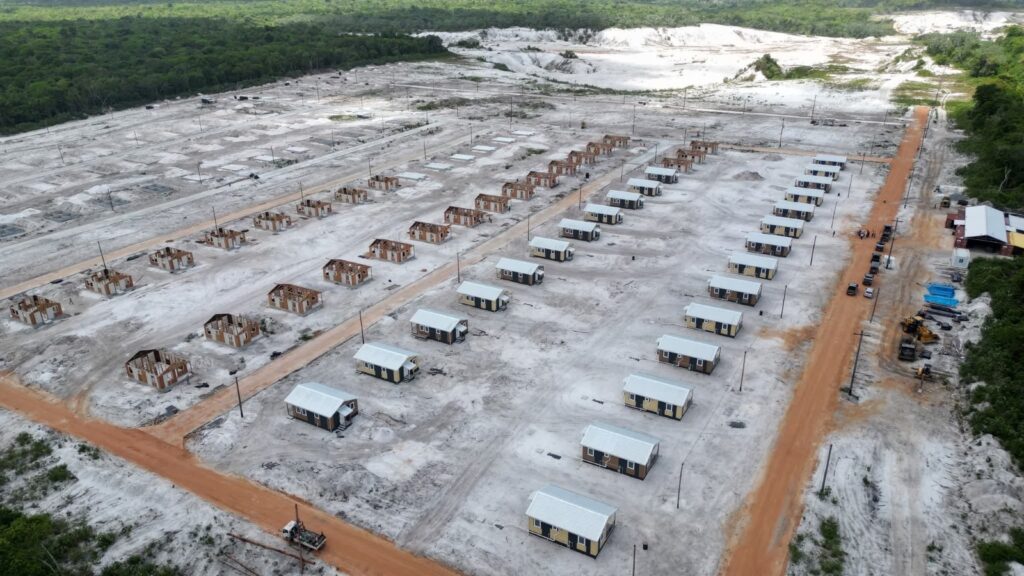
Being financed at a cost of about $6 billion, the overall project will eventually see 500 homesteads being built at Yarrowkabra, a close-knit and quiet village with a steadily growing population.
Each of the homes is being built with a 20 x 40 shade house at the back, where the recipients can grow crops to earn extra money or save grocery money by eating what they grow.
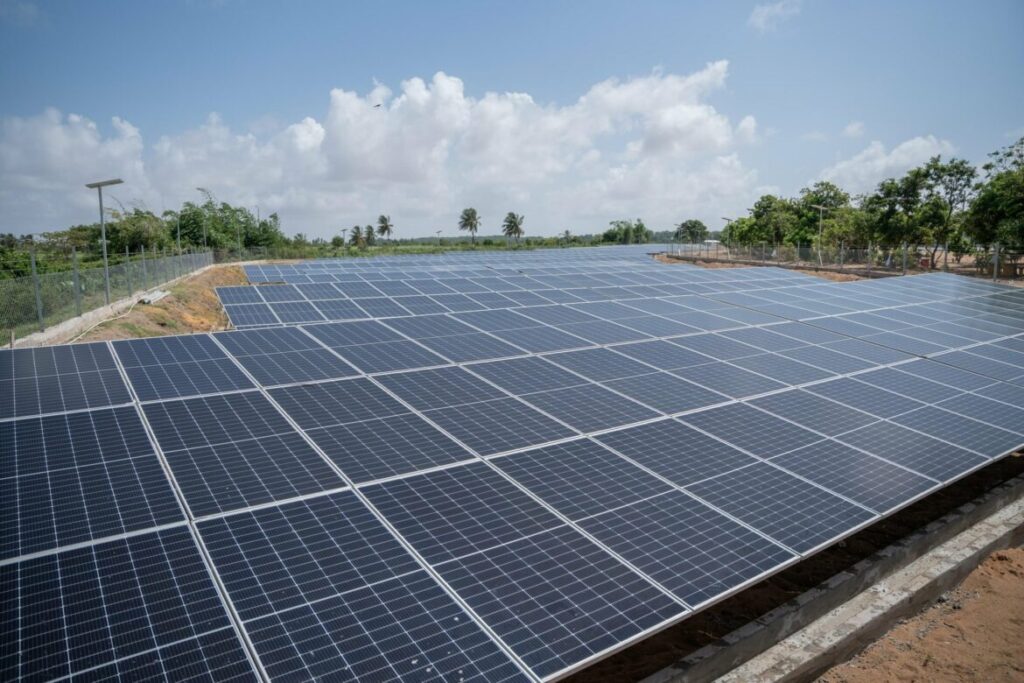
And each homestead will be powered by solar energy panels to provide renewable energy at a reduced cost. Considering the topography of the Hilly Sands and Clay region, solar energy is sure to be in abundance.
Guyana’s Minister of Housing Collin Croal recently described the Homestead Programme as one of the government’s initiatives geared towards benefitting women and single mothers.
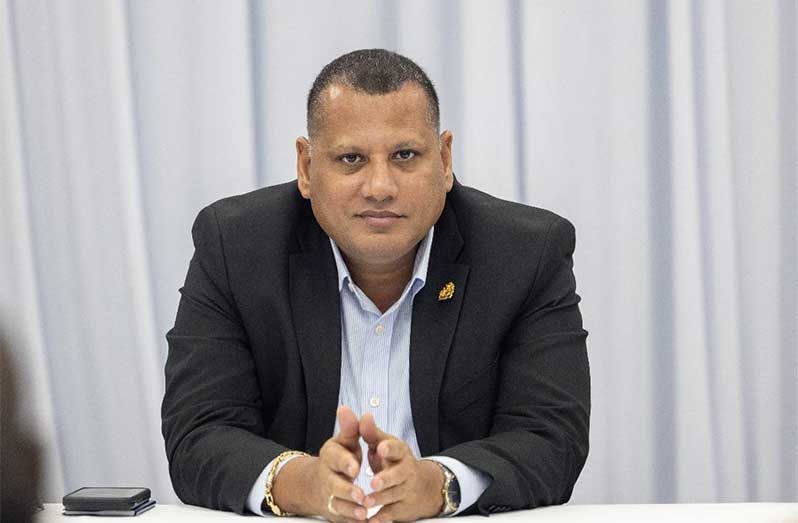
As a matter of fact, he indicated that the programme would be expanded.
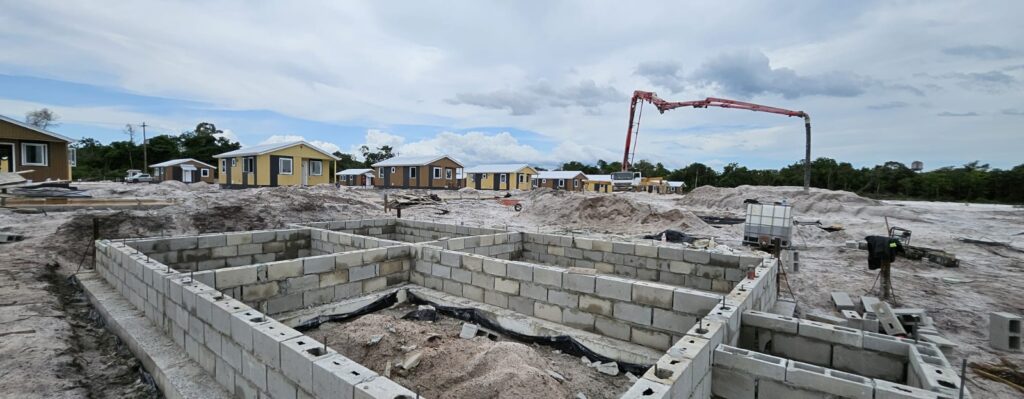
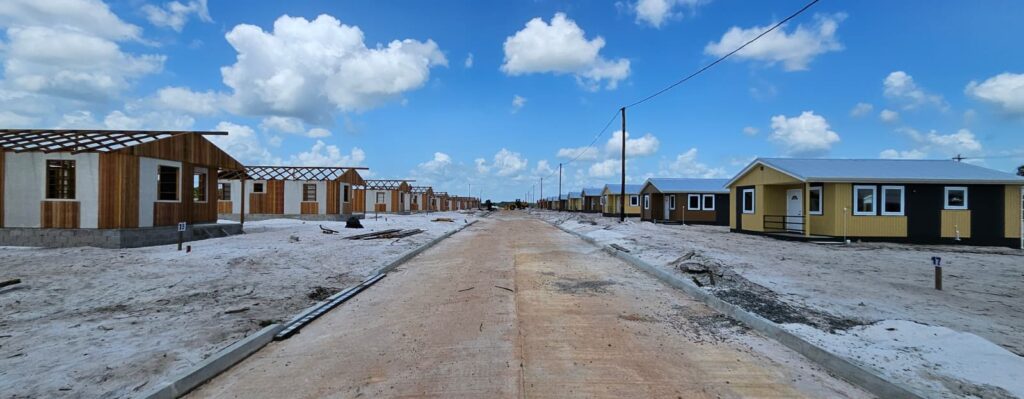
“In the next period, we’ll see the expansion of our Homestead project, and we have already started a similar [project] at Yarrowkabra. At Yarrowkabra, we have ongoing construction in the initial phase of over 250 houses.”
“In fact, 25 are complete, another 50 are being handed over within another two weeks, and that means, therefore, we’ll have 75 completed Homestead houses in the new month,” Croal said.
According to Croal, the Ministry will begin engagements in January 2026 with persons who have so far applied to the programme.
“We’re looking forward to this project as an expansion, because as part of the homestead, the houses [include] a shadehouse programme. And what we’re looking at with the shadehouse, is an economic opportunity for single moms to be able to earn an additional income to pay for their mortgage and loans.”
“To be able to acquire an additional resource to work in the day or whatever and on the side, you’ll be able to come and take care of your shade houses, to earn a little more. And to be self-sufficient,” he added.
Lessons
The programme’s uniqueness has attracted the attention of its target group — single mothers. According to Akesha John, a teacher by profession who courageously raised her daughter as a single mother, the programme is one of great merit.
“I feel the Homestead Programme is a great opportunity for single mothers because it will provide stability, independence, and long-term security. Having access to land or housing support can significantly improve the quality of life for families,” she said.

John highlighted the significance of single mothers having their own homestead. It means “greater financial security (and) a safer living situation for myself and child.”
Tamica Garnett, a journalist and single mother of one son, also highlighted key benefits from the project, as well as the potential for the single mother beneficiaries to pass on the lessons of self-sufficiency to their little ones.
“From the first moment I heard about the proposed homestead programme for single moms, I thought it was an amazing initiative, and very forward-thinking of the government to lead the way on something like this.”
“I wasn’t just in love with the idea of the homestead but also the way the government is aiming to make it sustainable and self-sufficient through harnessing solar power. I love the idea of anything that can help not just ourselves but the environment as well.”
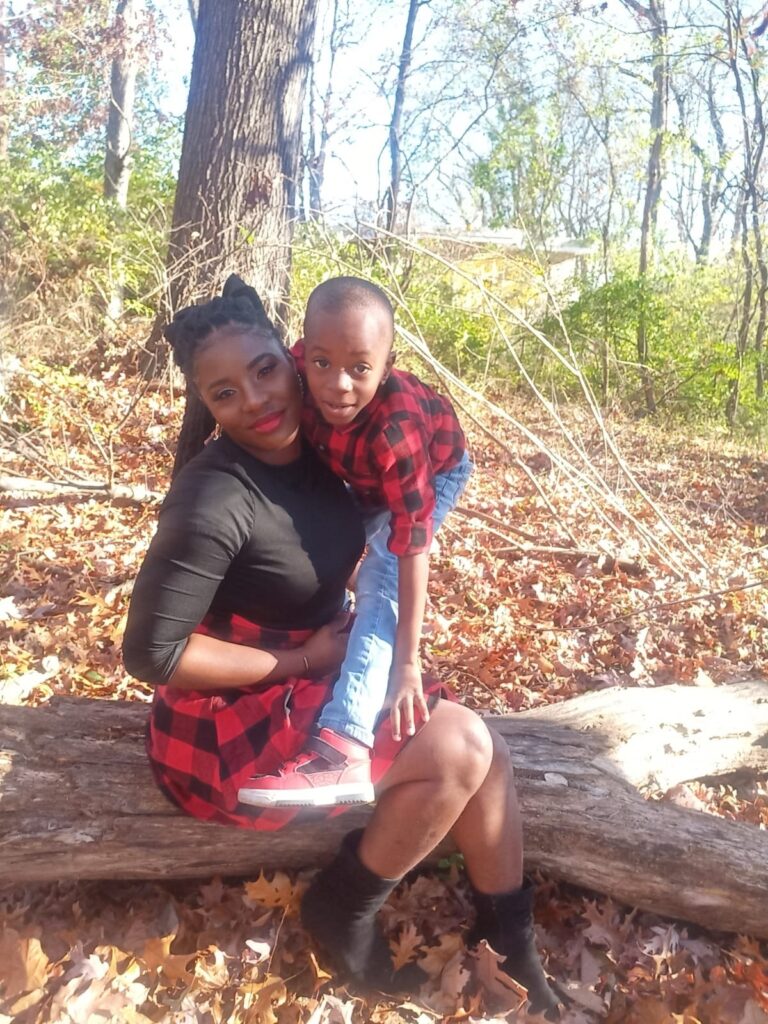
Garnett recalled that she herself is into agriculture and operates a small kitchen garden at her home. She also employs the use of solar lights around the house. Hence, the benefits of producing one’s own food while using solar power is evident.
“It is all the more remarkable that this programme is aimed directly at benefiting single mothers. I can’t think of a demographic group that is more deserving of being placed in a self-sufficient environment.”
“Putting something this phenomenal in the hands of single moms would have an amazing multiplier effect. These mothers will pass on the skill of self-sufficiency to their children, and we can only build from there.”
Both Garnett and John also expressed an interest in applying for the project.
Private Sector partnership
A key aspect of the project is the private sector. Early on, President Dr. Irfaan Ali had indicated that the private sector would be partners in developing the Homestead programme.
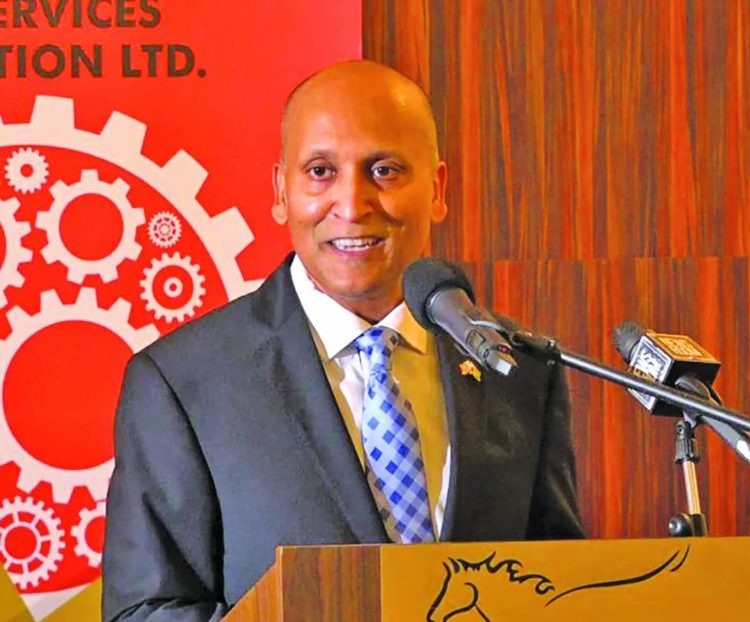
Here enters Duravilla Homes Guyana Inc., founded by Rafeek Khan, a businessman who is a second-term President of the Guyana Manufacturing and Services Association (GMSA).
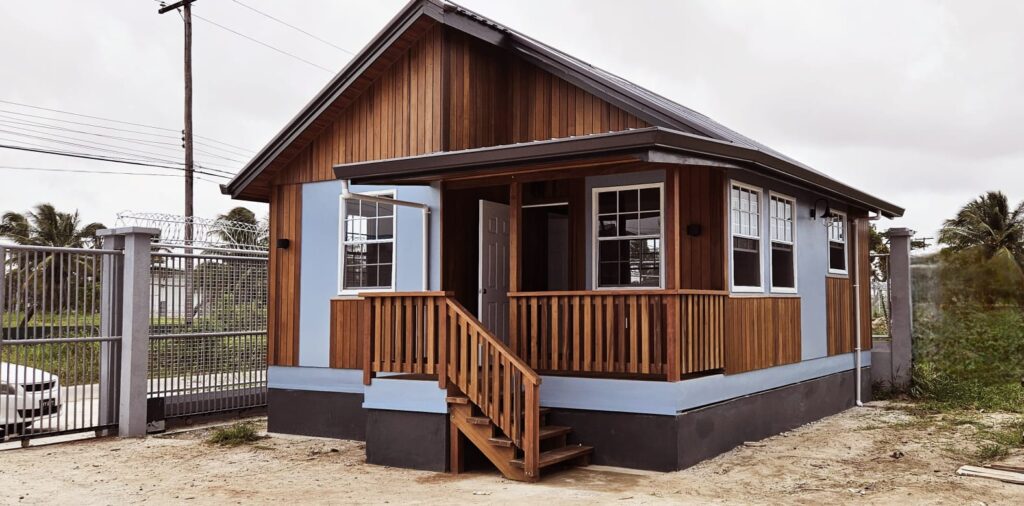
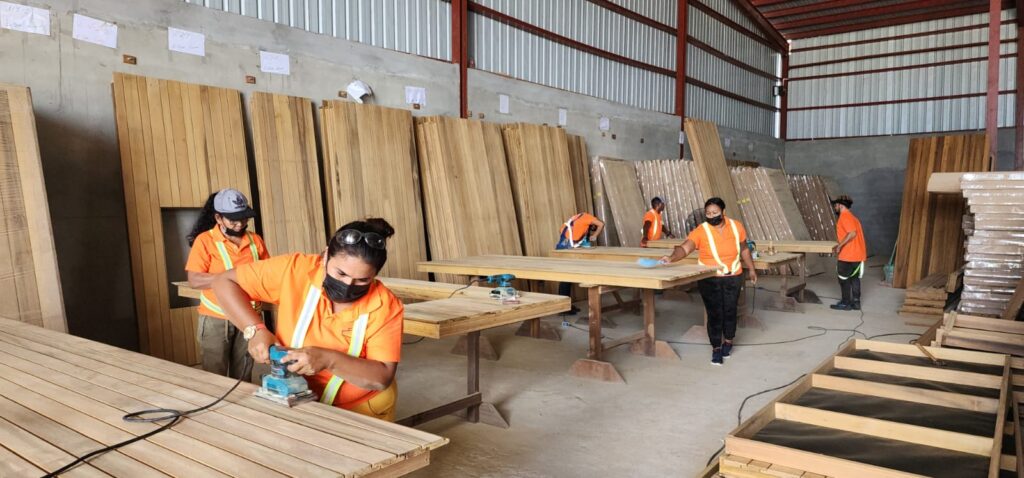
He explained that each of the homes being built by his company is derived from local and durable hardwoods that were produced through a sustainable process.
Further, Khan assured that each modular timber home for the single mothers will feature an advanced design. As a matter of fact, Khan’s company has been supplying modular homes to or serving as inspiration for other Caribbean countries.
“The company’s first modular timber home was constructed and showcased at the Guyana Energy Conference in 2022, marking a significant milestone. The innovative concept quickly gained regional attention, with the government of Barbados purchasing two models for Agrofest 2022. Subsequently, the Government of Saint Vincent and the Grenadines also adopted Duravilla’s homes.”
“Beyond constructing homes, the project is dedicated to building a vibrant community that integrates value-added manufacturing, supporting the development of a circular economy. This approach ensures resources are reused and benefits are maximized for both residents and the wider community,” he further explained.
In terms of dimensions, each home will have spacious, modern two-bedroom layouts designed to optimize land use. Each property will also have space in the back yard for a shade house.
“The shade house, measuring approximately 20 feet by 40 feet, provides a valuable source of supplemental income for single mothers, transforming each home into a true homestead that supports both residential and entrepreneurial aspirations,” Khan added.
A central theme of the Homestead programme is its circulatory ecosystem — from the single mothers who have a home and an entrepreneurial head start to their children who gain early lessons in agriculture and entrepreneurship, to the private sector, which can provide work for employees and support services alike.
And, of course, this project adds to Guyana’s monumental renewable energy transition.