admin
admin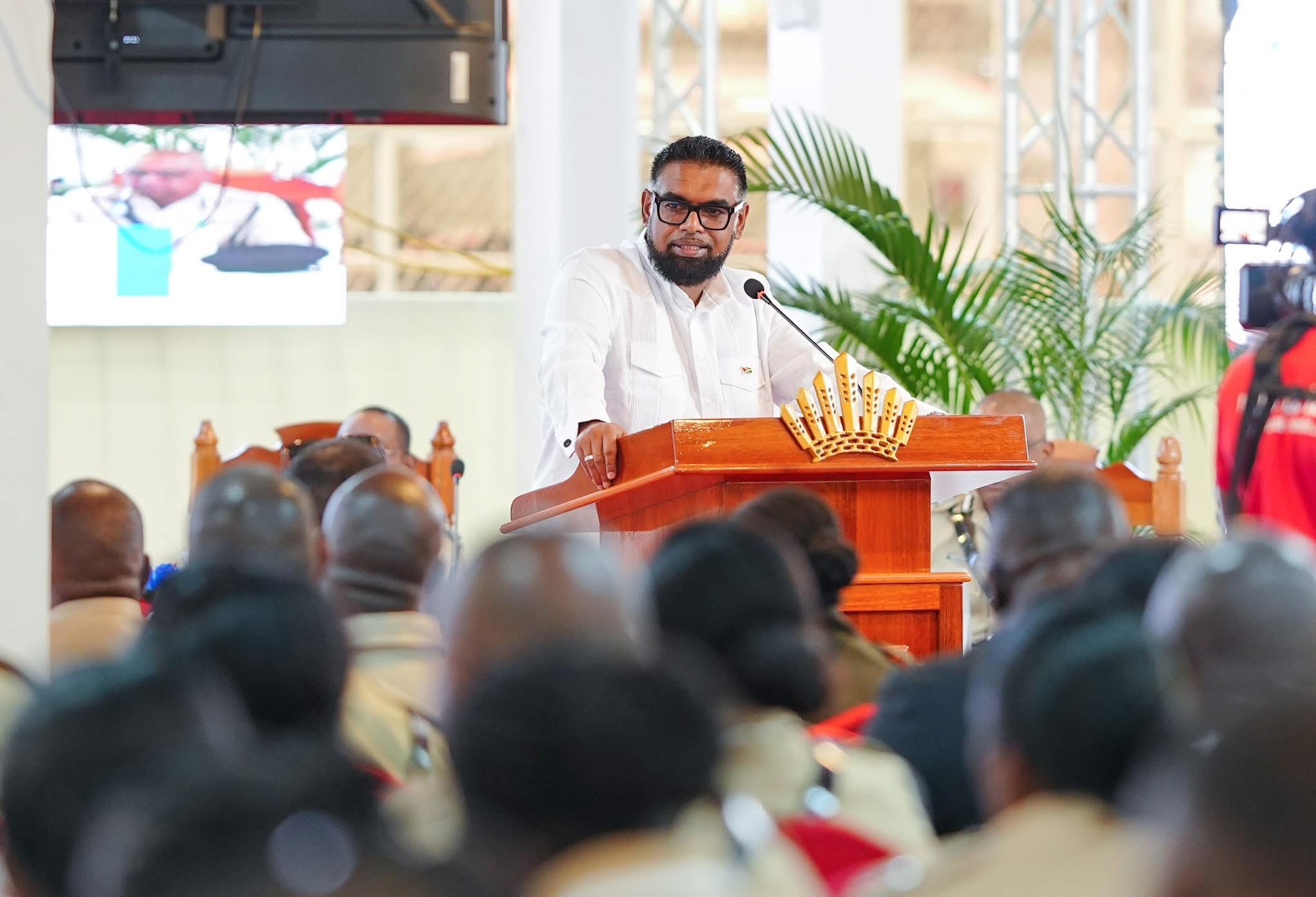
President Dr. Mohamed Irfaan Ali has announced that all police examinations, including promotional tests and theoretical driver’s licence exams, will soon be administered through the Guyana Digital School, removing responsibility for setting and marking exams from the Guyana Police Force.
Under the new system, examinations will be independently conducted on a digital platform. Artificial intelligence will be embedded to generate questions shortly before each test, drawing on relevant laws and regulations. The same AI-enabled process will also be used for theoretical driver’s licence examinations.
The President said he has already engaged the Ministers of Education and Home Affairs on the transition, noting that the Police Force must concentrate on operational duties rather than managing examination processes.
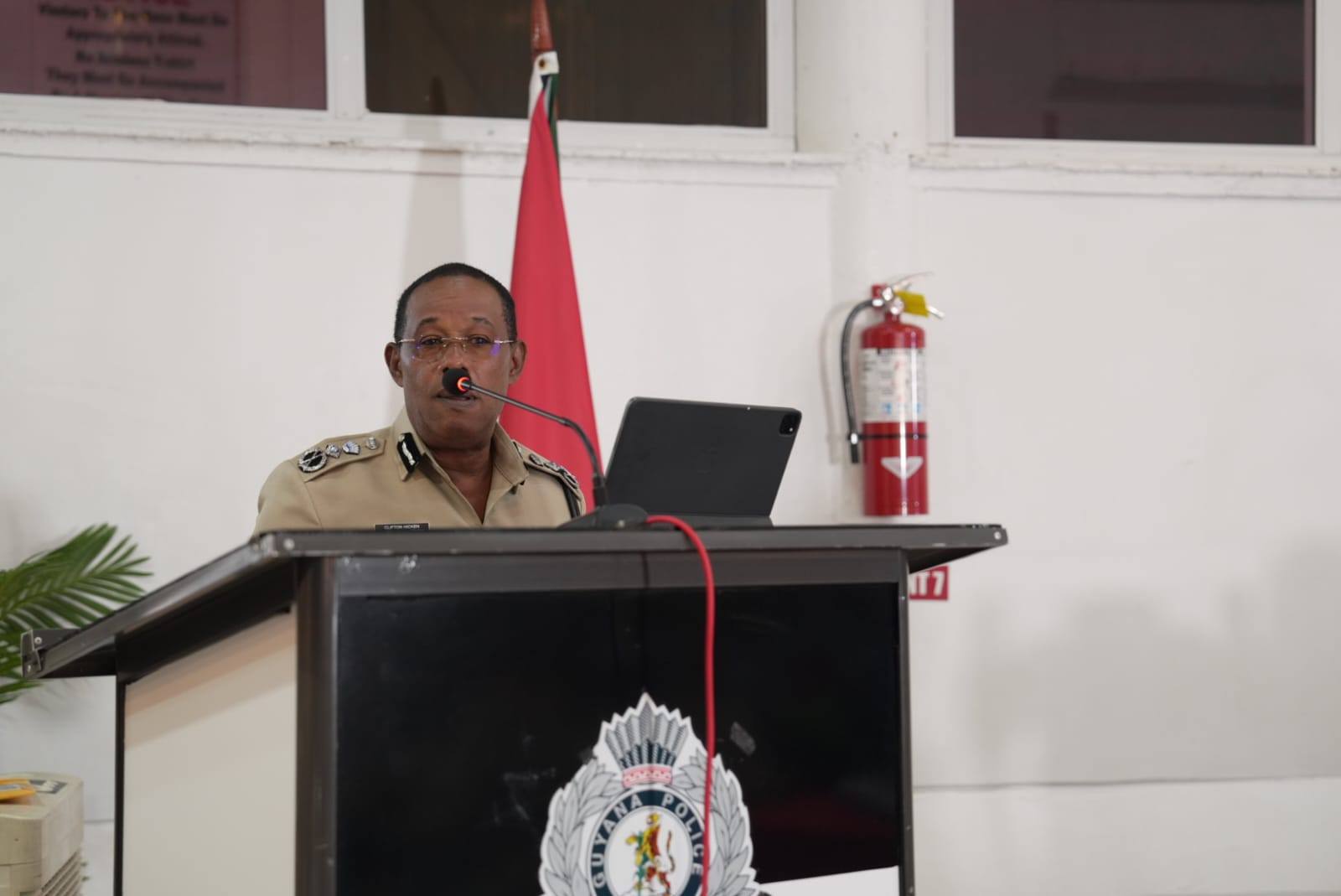
“That will be independent from the Guyana Police Force. Theoretical examinations for license and promotion exams and other such examinations,” he said during the opening of the Police Officers’ Conference on Wednesday morning.
The commander-in-chief of the Armed Forces further emphasised, “The police force is too busy doing important work. Matters of examination, random setting of questions, independent marking will now be migrated to the Guyana Digital School. And we are going to make it easy. We are going to dump everything… in the regulations and the laws into AI and AI will generate the questions one hour before the exams. Same thing for the theoretical exams for the licence,”
The President noted that the technology for this AI-driven approach has already been built and is ready to be integrated into the nation’s wider digital infrastructure.
He told officers that this reform is about building a more professional, merit-based Police Force that keeps pace with national development.
He stressed that as Guyana continues to modernise, its law enforcement institutions must also evolve, embracing technology and innovation to strengthen standards and public trust.
Meanwhile, President Ali also revealed that government is developing a technology-based safety platform to address growing concerns about domestic violence and gang-related threats, including those affecting schools.
The proposed system, now under review by government technology advisers, will feature a panic-alert mechanism for at-risk women and vulnerable schools, aimed at strengthening coordination among teachers, parents, law enforcement and support services.
The President noted that a similar model is being used in Mexico, and Guyana is exploring how it can be adapted locally to enhance protection and rapid response within communities.