admin
admin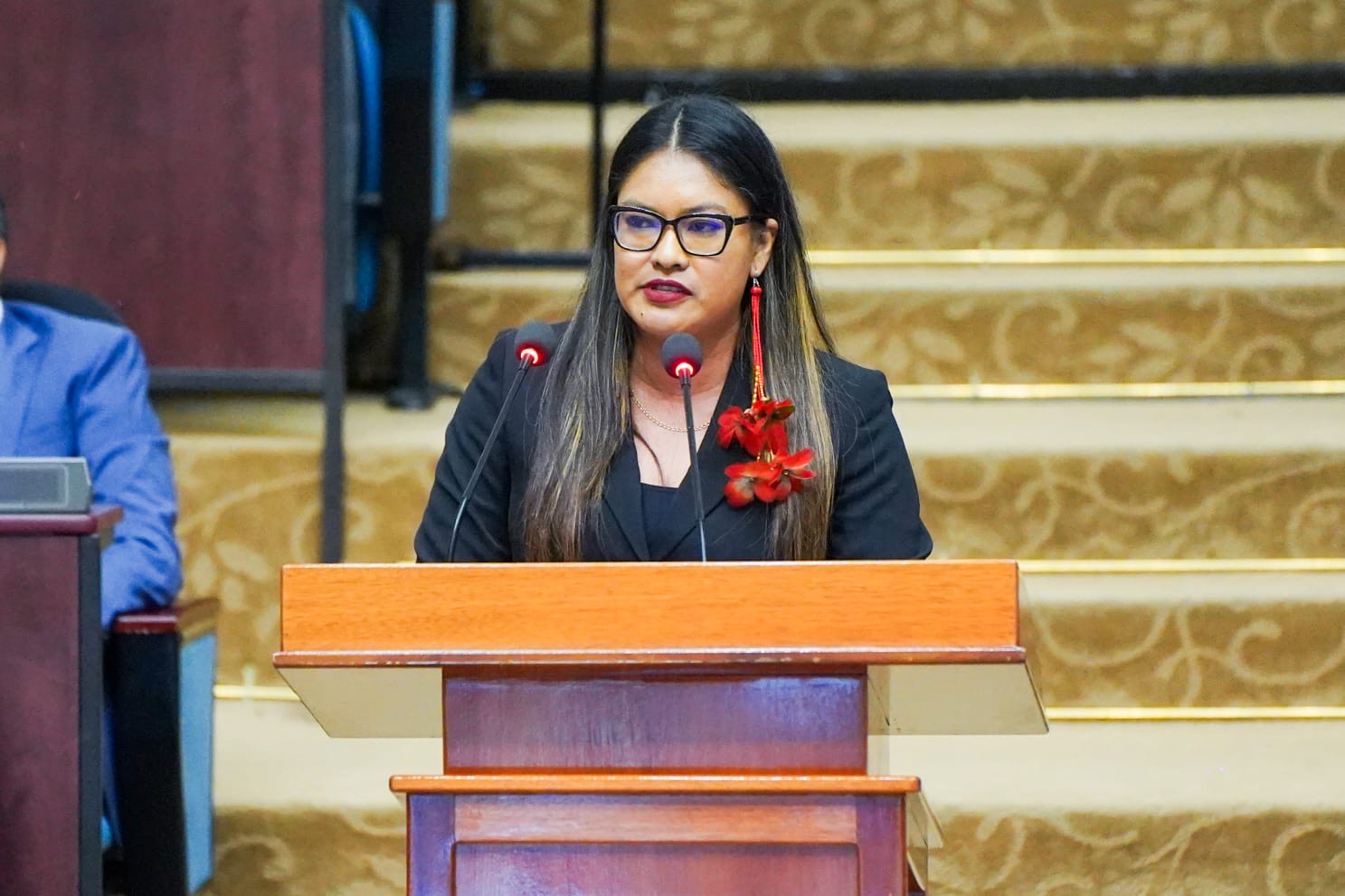
– Minister Browne chides opposition MP for debasing ‘Troolie’ houses
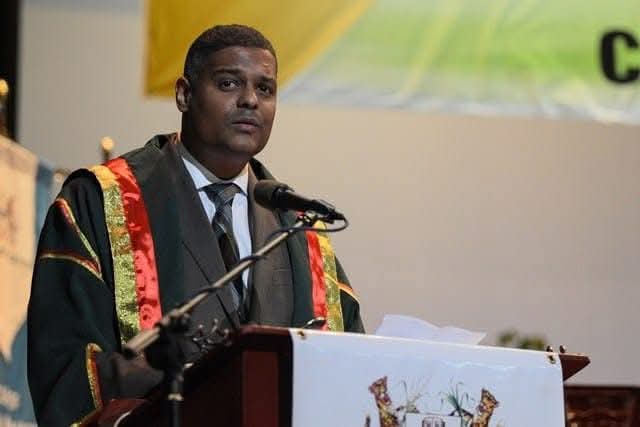
Minister of Amerindian Affairs, Sarah Browne has issued a sharp rebuke to Opposition Member of Parliament Deon La Cruz, condemning his disrespectful attempts to equate traditional ‘Troolie’ housing with poverty.
Delivering a vigorous defense of Budget 2026, Minister Browne championed the right of indigenous people to choose traditional dwellings, asserting that these homes are vital expressions of cultural identity and personal comfort rather than symbols of economic lack.
MP La Cruz is quoted in the media as saying that the indigenous people no longer want to live in ‘Troolie’ houses but rather prefer to live in mansions as a direct reflection of the upward trajectory of the country’s economy.
However, Minister Browne rejected opposition critiques of traditional lifestyles, asserting that real progress is defined by providing indigenous people with the resources, legal land security, and modern infrastructure needed to thrive while preserving their unique cultural identity.
She read to the House a message conveyed to her by an upstanding young indigenous woman from Kato, Region 8, who shared her distaste at the Opposition MP’s comment.
“Here is what Luana Augustus from Kato Region 8 had to say: ‘This is very offensive. Traditional homes are not symbols of failure and poverty. They reflect culture, climate, knowledge, sustainability and identity passed down for generations. Development should give people choices, not erase who we are’.” the minister said.
Augustus is also quoted as saying, “Real progress is clean water, free health care, free education, roads and opportunities to improve our livelihoods, and that is what this government is committed to doing. Not everyone wants the same definition of development.”
Minister Browne further disclosed that in consultations for government assistance in housing development in Region 8, many residents chose traditional housing styles.
“That choice is important. Our people have lived in truly and traditional houses for generations. To generalize and imply that our way of that our way of life needs replacing is to speak down an indigenous people. Real development is about options, dignity and consultation,” she further quoted.
The minister said that the 2026 provisions are designed to bridge the developmental gap between the coastland and the hinterland by investing directly in the dignity and autonomy of Amerindian people.
She reminded the House of the $7.5 billion allocation toward the continued development of Amerindian livelihoods, which includes an increase in funding to provide essential transportation such as boats, engines, and ATVs to remote communities. She specifically highlighted the removal of taxes on outboard engines up to 150 horsepower and ATVs, noting that these are not luxuries but vital necessities for those living in mountainous and riverine areas.
“Since resuming office, we have allocated and distributed 400 assets specific to transportation for the needs of our villages. It means, Mr. Speaker, that for educational purposes, the children will not have to walk or paddle to school for long distances. And this will continue with budget 2026, and beyond, until we have realized 100% accessibility,” she said.
She also detailed the success of the Low Carbon Development Strategy (LCDS) 2030, noting that at least 15 per cent of revenues from carbon credit sales will continue to flow directly into village bank accounts. This funding, she argued, allows residents to lead their own development through projects like the $5 billion Amerindian Development Fund, which supports diverse ventures from agro-processing to eco-tourism.
According to the minister, the indigenous people will benefit from every measure under the budget.
“Our newborn babies will benefit from $100,000 one-off cash grant. Our elderly will receive $46,000 coupled with the annual transportation grant of $20,000. Every citizen 18 years and over, will receive a direct cash transfer of $100,000,” she reminded.
Further, the budget allocates $400 million to advance Amerindian land titling and $500 million to begin construction on a brand-new, modern Amerindian Hostel in Georgetown, replacing the decades-old existing structure.