admin
admin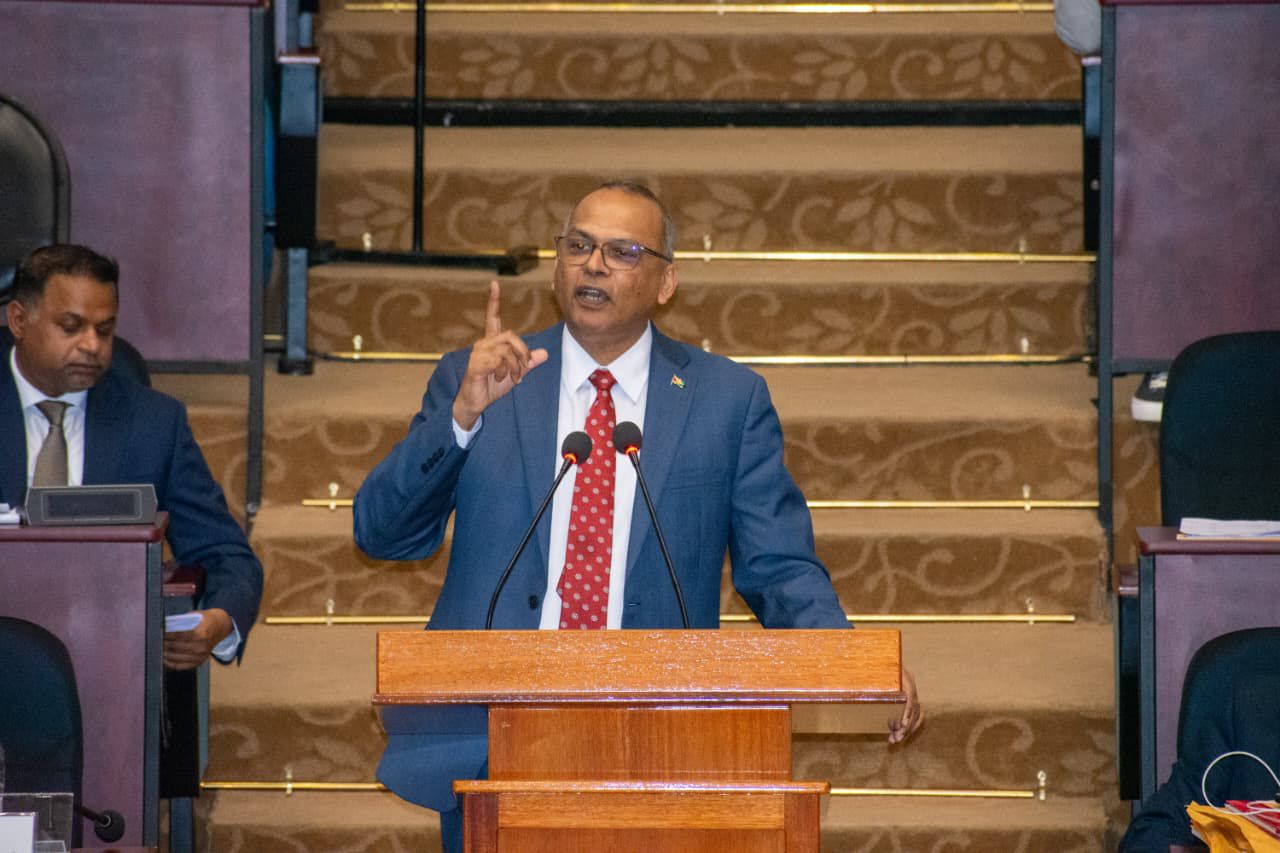
Guyana’s healthcare system is being transformed, moving away from traditional centralised care to facilitate a more high-tech, diagnostic-heavy model to better serve Guyanese.
Minister of Health, Dr Frank Anthony said that budget 2026 advances this vision, noting that the allocations reflect a heavy investment in specialised equipment and direct financial subsidies for medical services.
For instance, Budget 2026 provides for the expansion of the universal lab voucher program, which has already screened over 13,000 children for congenital conditions like sickle cell anemia. It also upholds the $15,000 spectacle voucher and $2,000 eye-screening initiatives that have reached over 160,000 and 175,000 citizens respectively.
A major pillar of this new health agenda is the preventative practice of early childhood intervention.
The Health minister noted that children entering nursery school are now screened for hearing, vision, and dental issues, with the public system absorbing the cost of follow-up care.
“Over the last two years, we have checked 18,374 nursery school children… if anything is wrong with them, we bring them into the public health system and we work to fix the problems that they have,” he said.
To advance maternal care, the minister pointed to the creation of 11 waiting homes over the last few years, a targeted measure to bridge the geographical gap in emergency obstetric care, bringing relief to those with high-risk pregnancies and those living in rural areas.
“When you want to get a baby, you don’t have to wait until you go into labor and then try to get to the hospital. What you do is that you go there before and you wait. And when you go into labor, we move you across so that you can deliver safely at our hospitals. Right now, as we speak, we have 100 beds in 11 waiting homes in regions 1, 7, 8, 9 and counting,” he explained.
Minister Anthony detailed how the budget employs a “life cycle” approach, deploying targeted financial and medical interventions that follow a citizen from the first week of life into their senior years. This cycle begins with the $100,000 Newborn Cash Grant, then transitions to the universal health vouchers, starting with lab vouchers for infants.
During the school years, this support shifts toward sensory health, with a $2,000 voucher for eye testing and a $15,000 voucher for spectacles, ensuring that vision impairment does not hinder educational development.
“So far, we have screened 55,717 children in primary schools across this country. And when they move from primary into secondary, we have started that process of screening secondary school children. And so far, we have screened 6,508 children in our secondary schools,” he said.
Dr Anthony further pointed out, “Another programme that we haven’t spoken much about is for teenage girls who need menstrual hygiene products, [they] can get it from the Ministry, and every year, we distribute to close to 15,000 young women across this country menstrual hygiene products.”
For adults, the $10,000 Universal Health Voucher introduced in the 2026 budget provides free access to a battery of diagnostic tests for non-communicable diseases, including kidney and liver function.
Referring to the Cervical Cancer Screening programme, the minister stated “So far, in over two years of this program, we would have screened 20,853 women. And any one of them who tested positive can come in and we’ll be able to treat them, so that it doesn’t have to move from being infected to developing cervical cancer. This is how this government is caring for people. Putting people first.”
Finally, the cycle culminates in the geriatric care programme for seniors, which integrates these eye care vouchers with increased Old Age Pensions of $46,000 per month and a new $20,000 annual transportation grant