admin
admin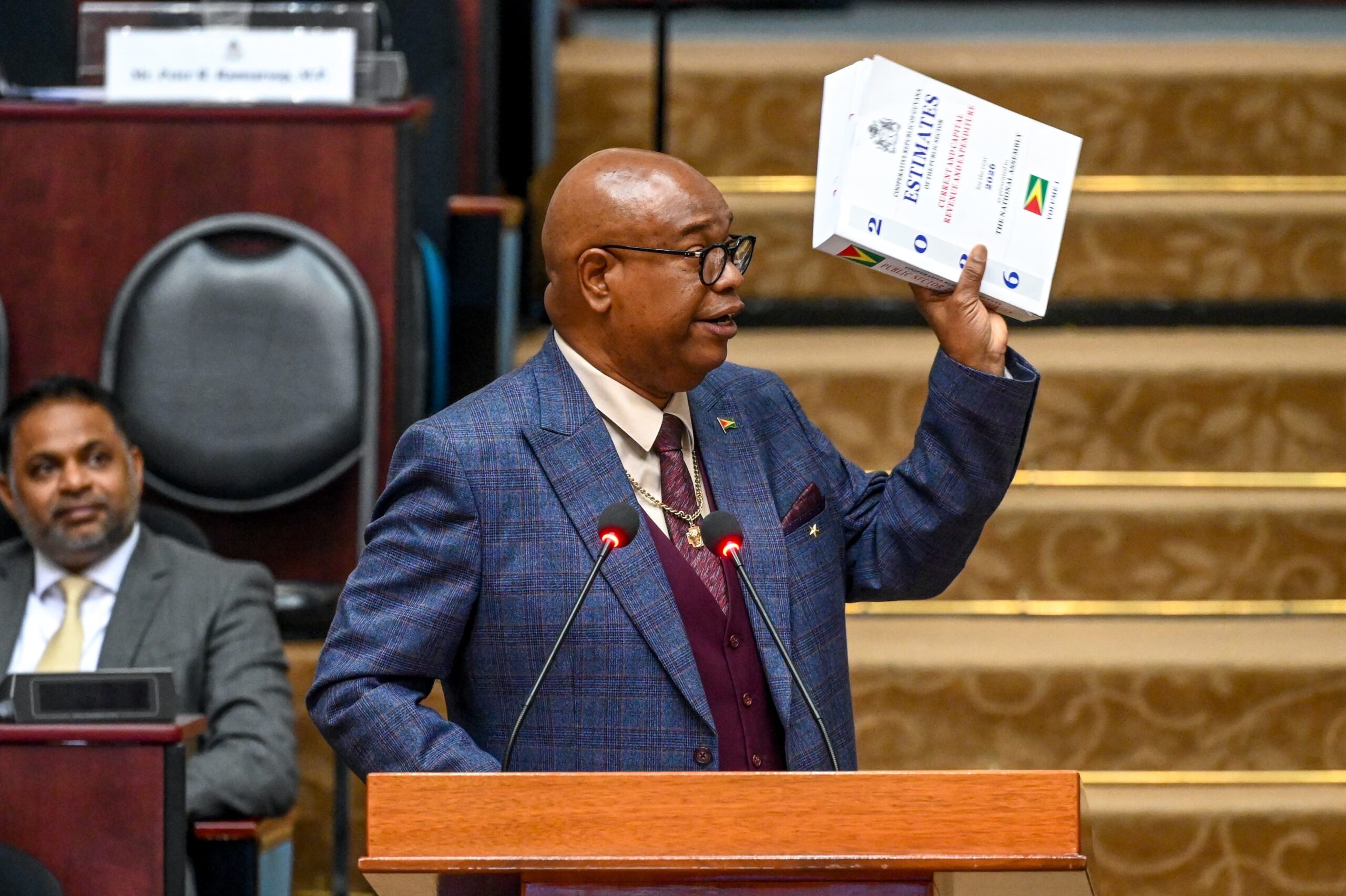
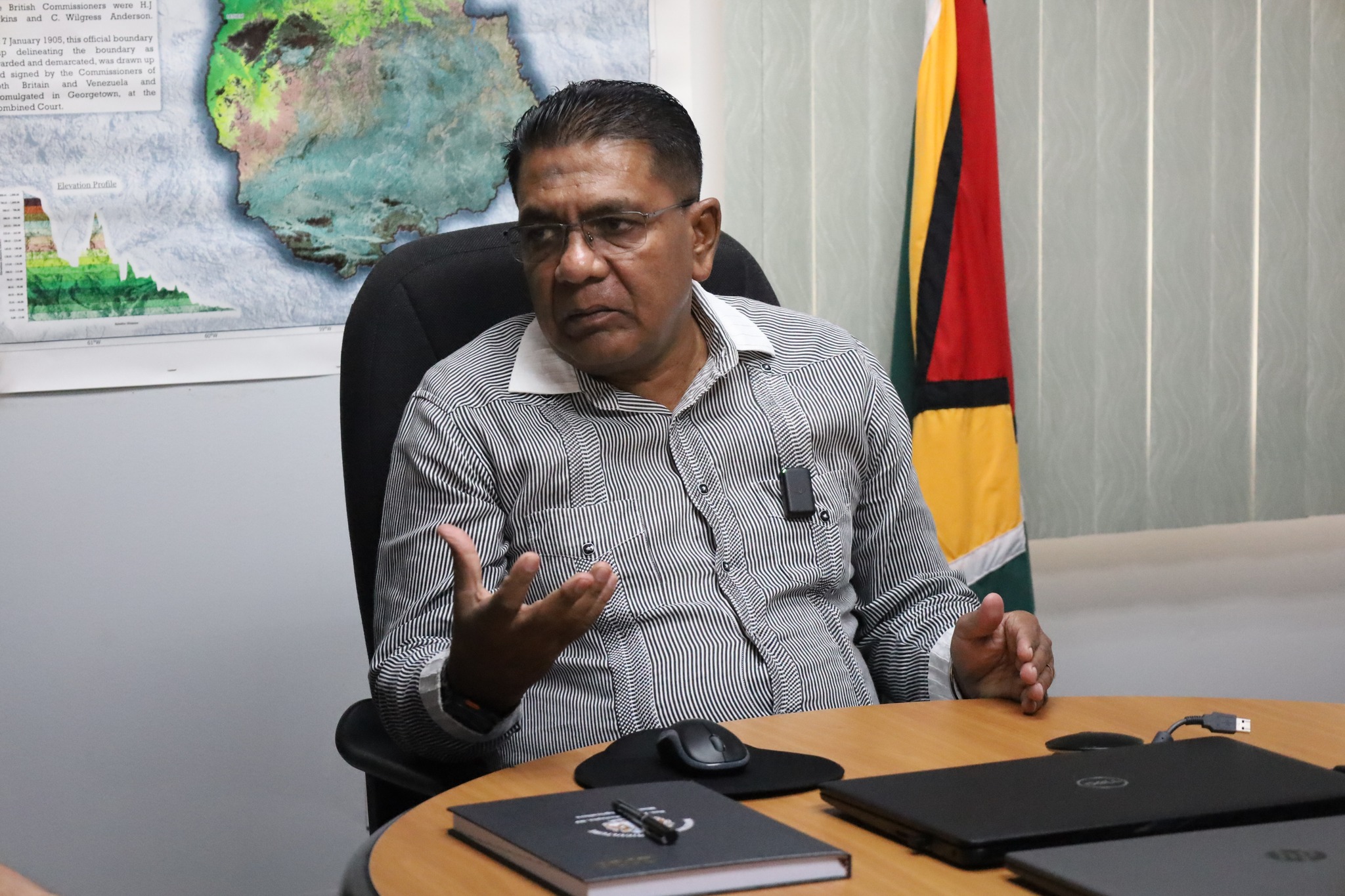
In a rousing defense of the 2026 budget on Monday, Minister of Public Works, Bishop Juan Edghill hailed the plan as a social contract of inclusion that seeks to ensure that no community is left behind in the nation’s rapid modernisation.
The public works minister told the National Assembly that the fiscal plan is specifically engineered to balance “growth with fairness and opportunities with inclusion”.
Central to this inclusive strategy is a diverse array of infrastructure projects aimed at linking rural, hinterland, and coastal communities to the national economy.
“The Ministry of Public Works has been allocated $227 billion in Budget 2026, with a capital expenditure of $212 billion, and this represents about 27 per cent of the total capital budget,” the minister said.
He acknowledged concerns about the heavy emphasis placed on infrastructure and reasoned that this focus is critical when taking into account the transformative impact that infrastructural development has on the individual.
“Ask all the people of Region 3 who travel to Georgetown to work on a daily basis, how $260 million on the new Bharrat Jagdeo Demerara River Bridge has transformed their lives. Ask the people of Diamond and those who will go further up, how the new Heroes Highway has transformed their lives and how they can get to work and back home and get their children to school early. Ask the people who use the Ogle-Eccles Interlink, that is now moving on to Providence, with a direct link to the Bharrat Jagdeo Demerara River Bridge, how investment in infrastructure is making a difference in their lives,” he said.
Detailing projects under his gamut that reflect this transformation, the public works minister pointed to the ongoing construction of the construction of 29 bridges and road upgrades to link Region 9 and Region 8, alongside the continuation of the road from Mabura Hill to Kurupukari.
To support the 450,000 Guyanese who rely on river transport, the government is also acquiring a new vessel for Region 7 and constructing a 4,000-foot airstrip in Region 1 to bring down travel costs.
“The new bridge over the Kurupukari River is cleared for in Budget 2026. Provision is made for a new bridge across the Berbice River in 2026, and provision is made for the construction of the bridge across the Corentyne River with Suriname in 2026. This is where the money is going, and we are putting people first,” the minister said, further punctuating this sentiment by adding that the infrastructure boom is intentionally structured to be inclusive of small businesses.
“Just in one project, the $37.5 billion that is allocated for miscellaneous roads will continue to support the 4,523 contractors, 15 million and below, that absorbed $50 billion of work in 2025. That’s our record!” he further asserted.
The $1.558 trillion 2026 fiscal plan heavy emphasis on modernising the nation’s transport networks and riverain connectivity. At the forefront of this is an allocation of $196.1 billion specifically designated for the expansion and rehabilitation of roads and bridges across the country.
Major projects also include the expansion of the East Coast railway embankment into a four-lane highway reaching as far as Mahaica. These initiatives are part of a broader strategy to establish new North-South and East-West corridors, such as the Heroes Highway and the Aubrey Barker Road extension, which are designed to ease traffic congestion.
Some $11.3 billion has been allocated for further development of the country’s sea defences, while $10 billion has been earmarked to construct, rehabilitate and maintain hinterland roads.
Furthermore, $2.2 billion has been budgeted to advance the construction of the new Parika Ferry Stelling and its associated waterfront development. This project is intended to modernise the facility into an international port of entry and a strategic hub for tourism, agriculture, and shipping. Similar upgrades are planned for facilities at Charity and Port Kaituma to support agricultural exports.