admin
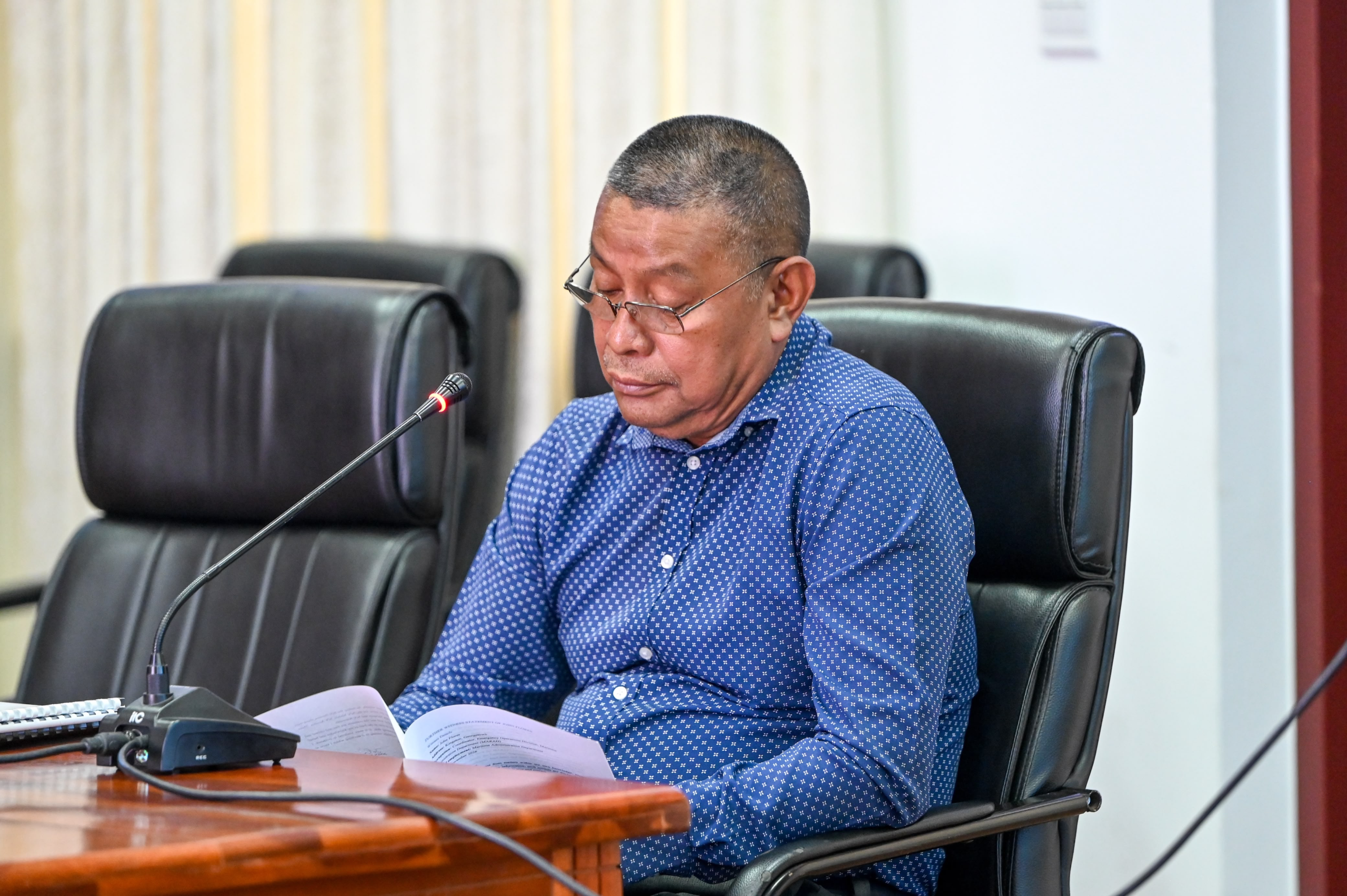
Improving Guyana’s maritime search-and-rescue capabilities and preventing future tragedies were central to Friday’s testimony by Captain John Flores before the Commission of Inquiry into the sinking of the MV Barima.
Continuing his testimony, Flores, Director of the Maritime Rescue Coordination Centre (MRCC), faced questions about emergency communication, vessel identification, safety inspections and coordination among rescue personnel.
A key issue was whether earlier identification of the MV Barima could have accelerated the emergency response.
Flores acknowledged that rescue authorities could have gained approximately one additional hour had they known immediately that the distress signal originated from the passenger vessel.
The Commission heard that the vessel’s Emergency Position-Indicating Radio Beacon (EPIRB) was not registered, preventing authorities from immediately identifying the source of the alert.
Flores explained that maritime authorities routinely receive distress signals and must assess the nature of each emergency before determining the appropriate deployment of resources.
He indicated that knowing a passenger vessel carrying a large number of people was in distress would have allowed for an earlier, more targeted mobilisation of rescue personnel and equipment.
Commissioners also examined communication among fishermen, maritime authorities and other emergency responders during the operation.
Flores acknowledged that the initial hours were challenging, particularly as rescuers operated in different locations and information was not always immediately shared.
However, he defended the overall search-and-rescue effort, noting that aircraft, vessels, fishermen and other personnel were mobilised to locate survivors.
He explained that by approximately three or four o’clock in the morning, rescue coordinators had developed a clearer understanding of the situation and the deployment of available resources.
Beyond the emergency response, commissioners examined the registration and maintenance of safety equipment, including the MV Barima’s EPIRB, which earlier inspection reports had identified as unregistered and having an expired battery.
Flores also outlined efforts he had made to address missing documentation relating to government-owned vessels, including raising concerns with the relevant authorities and encouraging compliance with registration requirements.
The Commission further questioned the interpretation of maritime regulations governing government vessels, particularly their inspection and certification requirements.
Attention was also given to recordkeeping, digitalisation and the need for clearer systems to monitor vessel inspections and safety compliance.
While maintaining that considerable resources were deployed during the rescue operation, Flores agreed that more efficient communication and earlier identification of the distressed vessel could have made the response more effective.
Friday’s proceedings highlighted two central priorities: ensuring that maritime emergencies receive a swift, coordinated response and strengthening vessel safety oversight to reduce the risk of similar tragedies.
The Commission’s findings are expected to inform recommendations on maritime safety, regulatory oversight and emergency preparedness.