admin
admin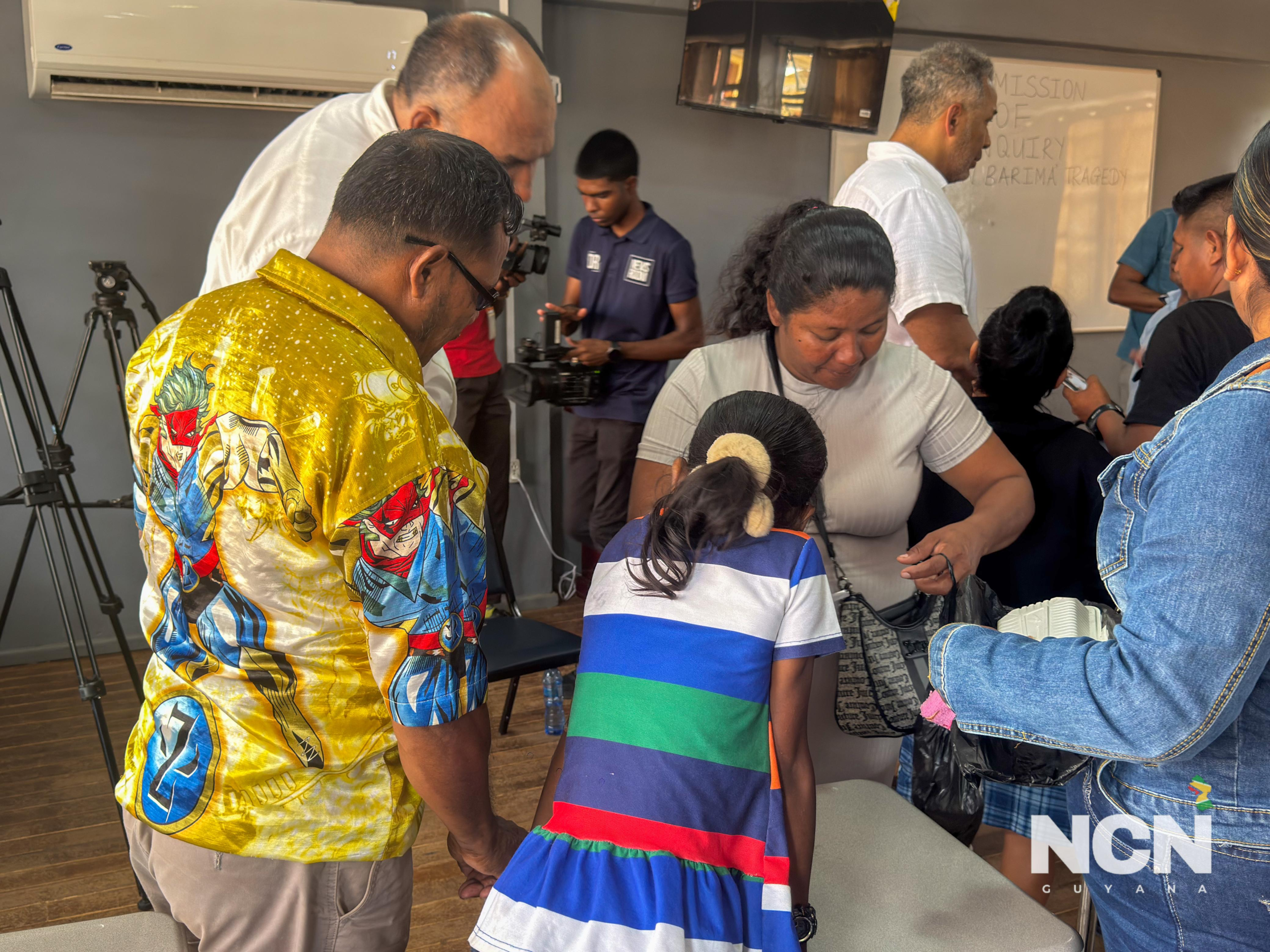
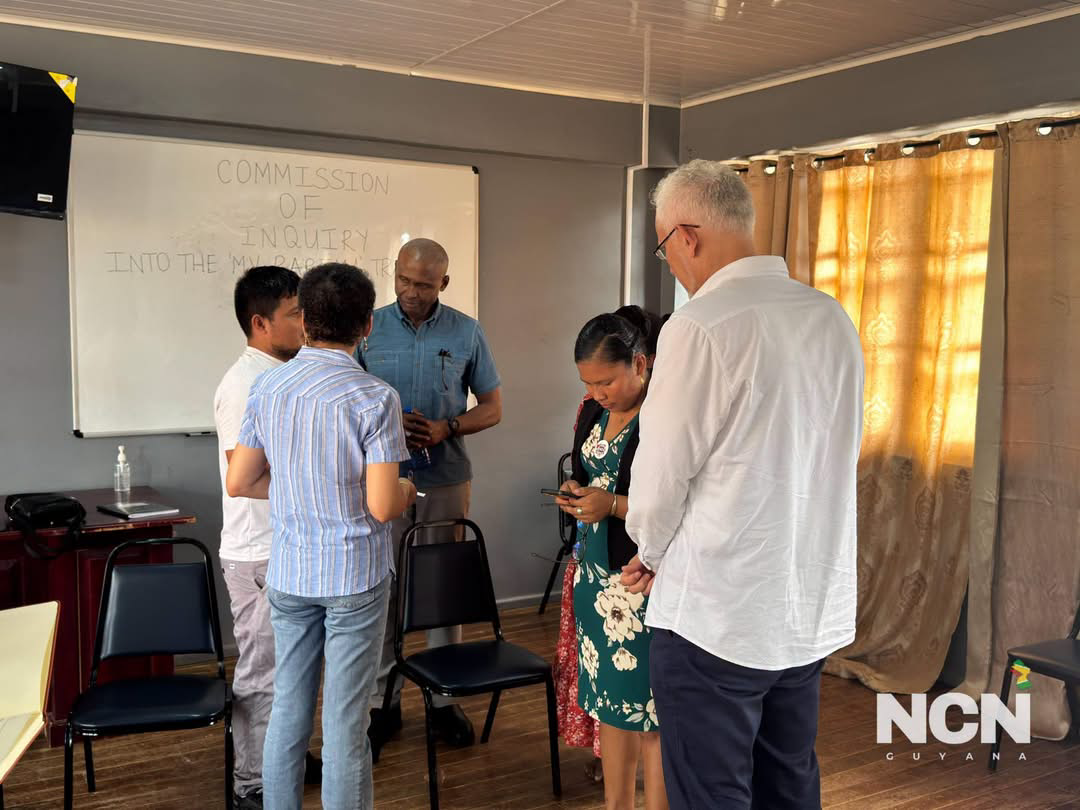
Ahead of the commencement of substantive hearings on Wednesday, the Commission of Inquiry into the sinking of the MV Barima visited Mabaruma on Monday to hear firsthand from survivors and encourage them to give evidence before the commission.
During the community engagement at the Narie Extension Centre, commissioners assured survivors that appropriate arrangements would be made for those who choose to testify at the hearings in Georgetown.
While the meeting was not a formal hearing or a session for taking testimony, it allowed survivors and bereaved families to meet the five commissioners, discuss the inquiry’s objectives and raise questions about the investigation.
About 36 people from Mabaruma and surrounding communities in Barima-Waini, Region One, attended, some travelling long distances.
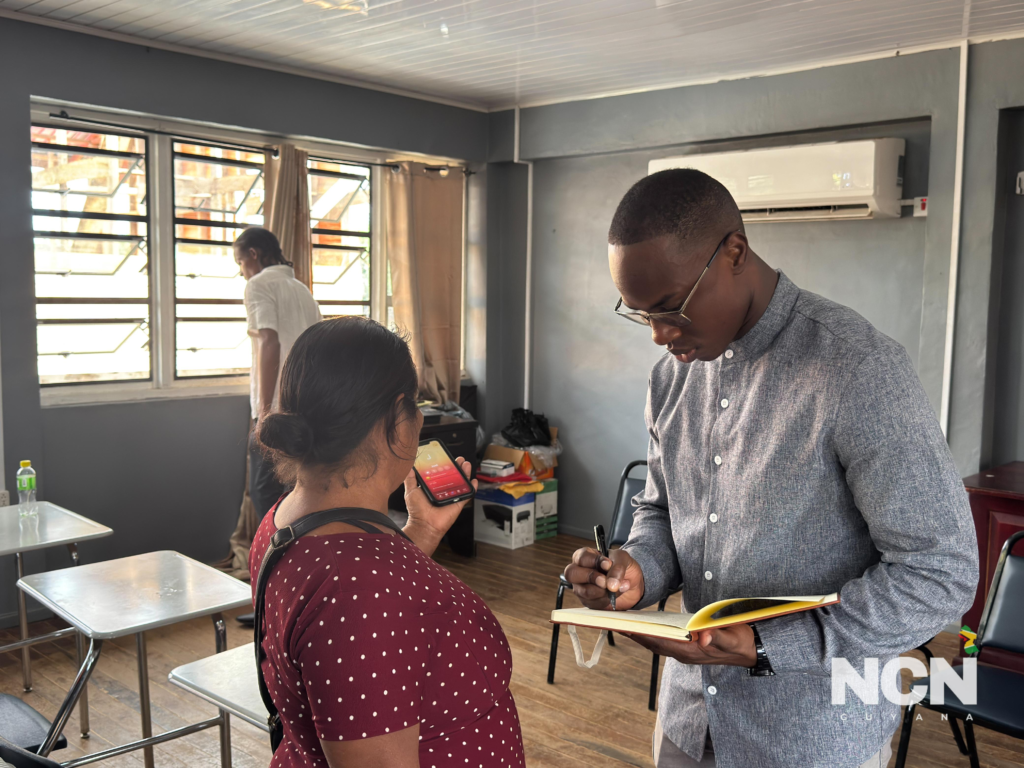
Among them was Andre Cox, Toshao of White Water, who raised questions on behalf of families he said were unable to attend. They wanted to know how long the investigation would take and when the sunken vessel would be raised.
Commission chairman Justice Godfrey P. Smith said the team anticipated taking about six months to complete its findings and submit a report to President Dr Mohamed Irfaan Ali.
Raising the Barima, however, was outside the commission’s responsibility, he explained. That matter rested with the government.
Cox also asked what was planned for those who had been aboard the vessel and remained unaccounted for. Justice Smith acknowledged the question but said he did not have an answer.
The Toshao told commissioners that a psychologist visits White Water every Monday to provide support to survivors and affected families.
Alongside questions about the investigation came deeply personal accounts of survival and loss. Although the meeting was not convened to receive formal testimony, several people spoke about what they had endured.
Leon Murray recounted his struggle to survive that night. He pointed to his son, seated at the back of the room, who had also survived. His wife and other children did not.
His voice cracked as he spoke, and many in the room could not hold back their tears. Commissioners listened attentively, took notes and asked questions to clarify details.
Asked afterwards about the visit, Murray said he “thanked God they came to investigate what happened and how it happened,” adding that he “was pleased that they came.”
For fellow survivor Ormon Cox, the memories were of long hours in the water, surrounded by pitch darkness. He described removing his belt and using it to strap empty plastic bottles together to help him stay afloat.
After the meeting, Cox said recounting the ordeal often brought on intense headaches. Even so, he felt it was important to meet the commissioners. He said he had much more to tell them and looked forward to giving testimony before the inquiry.
Leroy Jerome’s visit coincided with a painful milestone: his son, who died when the Barima sank, would have turned three on Monday.
Jerome travelled from Barima to paint his son’s tomb and meet the commissioners. He said he was “happy that the commissioners came to meet the survivors and families.”
Maria Bowring and her husband, Albert Wells, lost their daughter and her children. They said their daughter, who had lived in Georgetown for years, was coming to visit them. She never made it home.
At the close of the engagement, many stayed behind to personally thank the commissioners for undertaking the investigation. Several pledged to attend the hearings in the coming weeks, if not to give testimony, then to show their support.
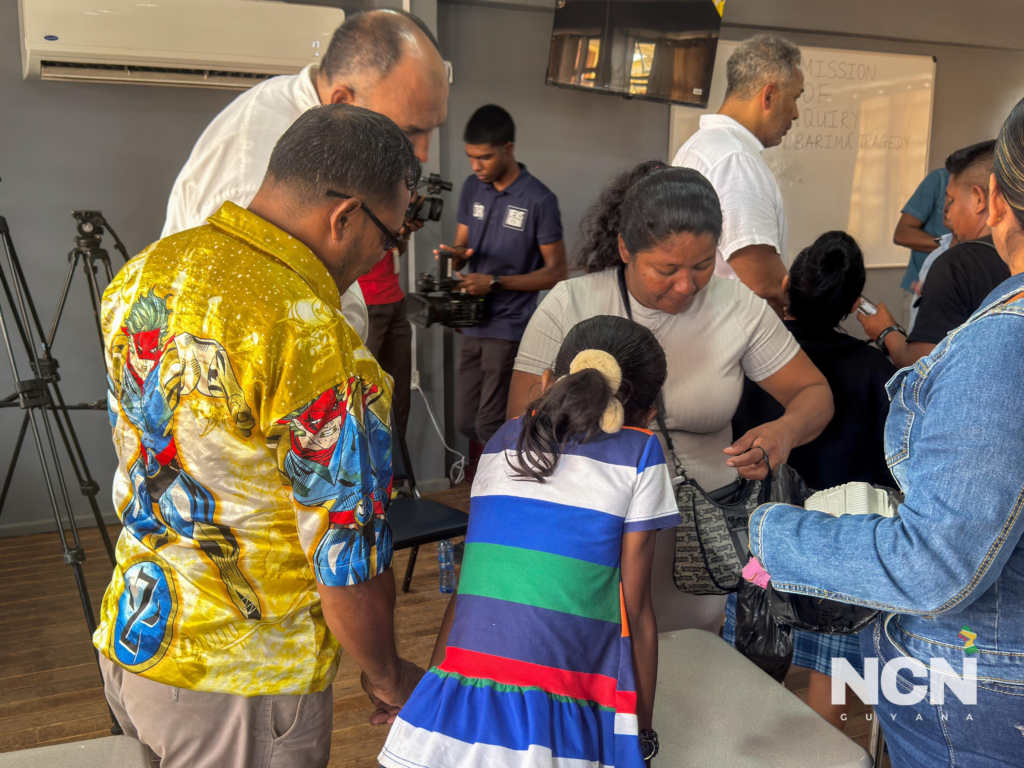
For Mabaruma and neighbouring communities, the grief remains palpable. Survivors continue to grapple with memories of the ordeal, while relatives mourn those they lost and seek answers about those still missing. The number of residents who died or remain unaccounted for has not yet been established.
Appointed by President Ali, the commission is tasked with investigating what went wrong and recommending measures to prevent a similar tragedy. Its community engagements and facility visits form part of its work to better understand the circumstances surrounding the sinking and its impact.
During the Mabaruma visit, commissioners also conducted a walkthrough of the wharf and cargo area before returning to Georgetown.
The MV Barima departed Georgetown on July 18, bound for Mabaruma before continuing to Port Kaituma. The journey from Georgetown to Mabaruma usually takes between 14 and 24 hours. The vessel sank late that night.
Justice Smith, of Belize, a former Justice of Appeal, chairs the five-member inquiry. Serving alongside him are Captain Hamada Fouda, an Egyptian residing in Jamaica and a maritime surveyor and safety specialist; Nyree Dawn Alfonso of Trinidad and Tobago, an attorney specialising in maritime law; Dr Andrzej Jasionowski of Poland, a naval architect and marine engineer; and retired Rear Admiral Hayden Pritchard of Trinidad and Tobago, an expert in maritime operations and security.
The commission is scheduled to visit Port Kaituma on Tuesday.